
🚀 Whispers from the silent cosmos
Stars Explode, Unveiling Hidden Worlds of Exoplanets
spacePublished 07 Jan 2026
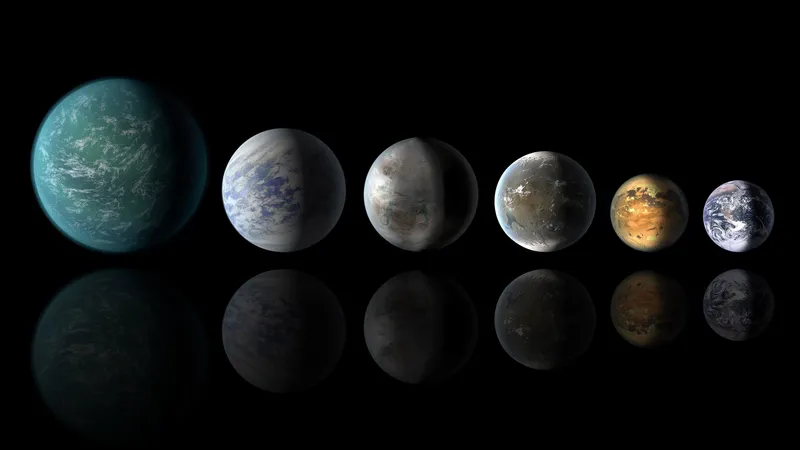
Image by NASA — Public domain
- What: A star's explosive death reveals hidden exoplanets within its debris.
- Where: Around white dwarfs in the cosmos
- When: Contemporary astronomical observations
- How: Through data collected by the Kepler Space Telescope
- Why: These findings challenge our understanding of planetary formation and evolution.
A cosmic dance of celestial oddities revealed
Imagine the shock as a star, in a cataclysmic finale, not only disappears but unveils hidden worlds swirling within its debris. Data from the Kepler Space Telescope has transformed our understanding of stellar evolution, revealing exoplanets that orbit white dwarfs—celestial remnants that cradle these newly uncovered worlds. Researchers continue to debate the characteristics and formation mechanisms of these planets, as gravitational interactions shape a remarkable cosmic ballet. How do these remnants influence the planetary configurations we once thought we understood?
Unearthing the astonishing evidence of exoplanets
The findings from the Kepler Space Telescope have turned our gaze toward white dwarfs, remnants left behind after stars exhaust their nuclear fuel and expel their outer layers. These once-magnificent stars surrender to gravity, evolving into dense, hot cores. Yet, within their remnants, a surprising revelation awaits. The telescope's observations have detected exoplanets in peculiar orbits around these dim companions, hinting at a complex relationship shaped by the star's explosive death. As matter disperses into a cosmic tapestry, these remnants can dramatically influence the formation and survival of planets, leading scientists to question long-held assumptions about planetary systems. Each discovery opens a portal into the unknown, suggesting that the remnants of stellar explosions can breathe life into new orbits—a stark reminder that the universe often defies our expectations. What other mysteries lie within the aftermath of stellar evolution?
The enduring significance of celestial remnants
These cosmic revelations resonate today more than ever as astronomers delve into the implications of stellar remnants. Understanding this dynamic can enhance our knowledge of diverse planetary environments, potentially leading us to discover worlds capable of harboring life. With each new glance into the cosmos, scientists aim to piece together the grand narrative of life and death among the stars while challenging our understanding of how planetary systems form and evolve. As we ponder our place in the universe, these hidden worlds beckon further investigation. What else might we uncover about our own solar system’s past?
Did You Know?
About 97% of all stars will eventually become white dwarfs, making them a significant part of our galaxy's stellar population.
The Kepler Space Telescope has confirmed the existence of over 2,300 exoplanets, providing invaluable data on planetary diversity and formation.
Some of the discovered exoplanets orbiting white dwarfs are theorized to have formed from debris disks created during the star's final expansion.
Keep Exploring
CurioWire continues to uncover the world’s hidden histories — one curiosity at a time.
Sources & References
- NASA Exoplanet Archive
- Astrophysical Journal
- European Southern Observatory