
🌿 Stories carved by wind and water
The Coral Reef Chaos That Defies Ecological Expectations
naturePublished 07 Jan 2026
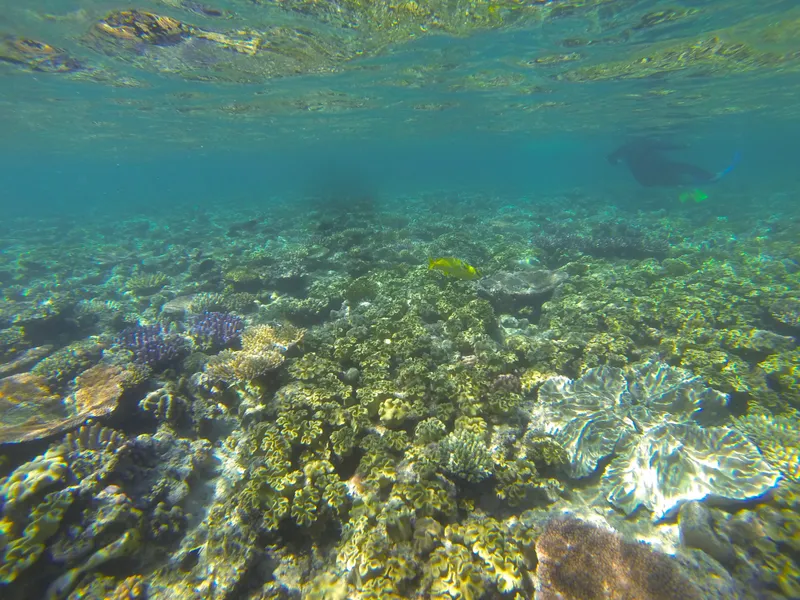
Image by Dmitry Brant — CC BY-SA 4.0
- What: The Great Barrier Reef reveals a chaotic interplay of species that challenges traditional ecological understanding.
- Where: Great Barrier Reef
- When: Contemporary ecological research
- How: Long-term monitoring data shows unpredictable species interactions and community dynamics.
- Why: Understanding these dynamics is crucial for conservation efforts in the face of global environmental shifts.
A Hidden World of Color and Complexity
Beneath the crystalline waves of the Great Barrier Reef lies an astonishing spectacle of life, where vibrant corals and an array of marine species coalesce into a chaotic dance of unpredictability. Long-term monitoring data from this iconic location reveals that the intricate web of species interactions is anything but straightforward, with surprising dynamics emerging that plunge our understanding of ecological relationships into disarray. What can this chaotic beauty teach us about the fragility and resilience of our ecosystems?
Unraveling Ecological Mysteries Beneath the Surface
The Great Barrier Reef, a UNESCO World Heritage site spanning over 344,000 square kilometers, is a living laboratory of ecological dynamics. Yet within this accredited haven, scientific findings often lead to more questions than answers. Long-term monitoring data illuminates the phenomenon of sudden shifts in community dynamics, highlighting how unexpected species interactions can arise, leading to events that challenge our established ecological models. Research indicates that species do not behave in linear, predictable ways; instead, they engage in interactions colored by chance, coincidence, and even chaos itself, resulting in ecological patterns that defy settled evolutionary theories. These complexities evoke the theme "Chaos beneath the surface blooms," urging us to reconsider what we believe about organic optimization and survival.
The Ongoing Importance of Understanding Reef Dynamics
Today, the implications of these findings resonate louder than ever. As global environmental shifts threaten marine ecosystems, understanding the unpredictable nature of species interactions in coral reefs like those in the Great Barrier Reef could be crucial for conservation efforts. Researchers continue to study these mechanisms, hoping to reveal insights that can aid in preserving not just coral reefs but the resilience of life across various ecosystems worldwide. The question remains: how do we navigate and protect these systems when their very essence defies our understanding? Perhaps the enduring chaos of coral reefs is a mirror reflecting the uncertainties of our own survival, challenging us to embrace the unknown and rethink our relationship with nature.
Did You Know?
Coral reefs are home to around 25% of all marine species despite covering only about 0.1% of the ocean floor.
During bouts of unexpected environmental change, certain fish species can adapt their behavior rapidly, showcasing a remarkable resilience in the face of chaos.
Research indicates that healthy coral reefs can recover from disturbances faster than previously thought, emphasizing the importance of protecting their dynamic ecosystems.
Keep Exploring
CurioWire continues to uncover the world’s hidden histories — one curiosity at a time.
Sources & References
- Australian Institute of Marine Science
- Nature Conservancy
- Marine Conservation Society