
🌿 Stories carved by wind and water
The Surprising Role of Fiddler Crabs in Tidal Marshes
naturePublished 06 Jan 2026
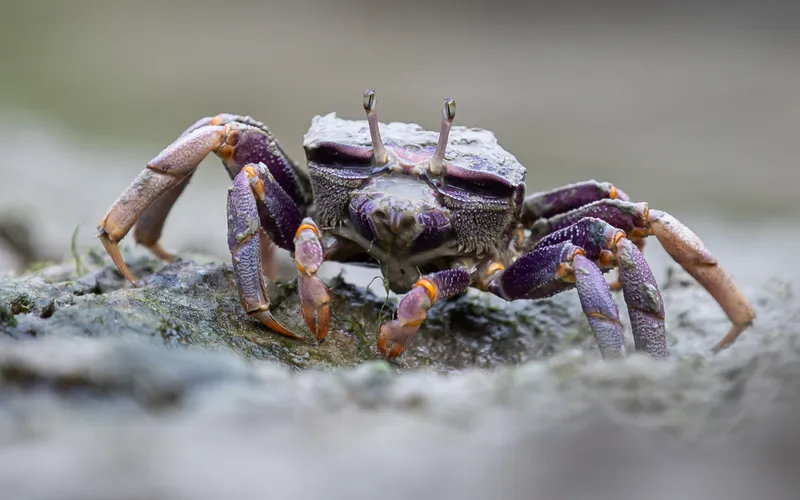
Image by Theo Kruse Burgers' Zoo — CC BY-SA 4.0
- What: Fiddler crabs engineer complex burrows in Florida's tidal marshes, significantly influencing their ecosystem.
- Where: Florida's tidal marshes
- When: Present day
- How: By digging burrows that enhance water circulation and nutrient distribution
- Why: Their activities reveal the intricate relationships and resilience of life in seemingly simple environments.
How Crabs Shape Their Swamp Ecosystem
Nestled within the brackish depths of Florida's tidal marshes, fiddler crabs engineer intricate burrows that may seem mundane but hold remarkable secrets. Recent sediment core analysis from these marshes reveals that these small creatures siphon nutrient-rich water, supporting a surprisingly complex ecosystem despite the low species variety present. How do such simple structures create intricate relationships in a seemingly straightforward habitat?
The Unseen Web of Life in Mud
Fiddler crabs dig their homes into the marshy substrate, crafting a labyrinth of burrows that serve not just as shelters but as vital organs of their ecosystem. This can be counterintuitive; one might imagine that simpler habitats would lead to simpler interactions, but the opposite appears true here. Researchers continue to debate the full impact of these burrows on tidal marsh ecology, with some proposing that they act as ecological arteries, channeling flow and nutrient distribution within the ecosystem. The relationships formed among these crabs and other tidal marsh inhabitants are more intricate than previously recognized, showcasing how life can flourish in environments that appear deceptively uncomplicated.
The Impact of Tiny Creatures on Ecosystems
Understanding the roles of fiddler crabs in these unique ecosystems shines a light on the broader implications for biodiversity and environmental health. Their burrowing activities improve water circulation and the exchange of nutrients, which in turn supports various forms of life within these marshes. This ongoing investigation into the behaviors of fiddler crabs serves as a poignant reminder of nature's complexity and resilience. As we grapple with environmental changes, the subtle dynamics at play in these ecosystems, where everything seems interconnected, leave us pondering how much more there is to discover in the world around us.
Did You Know?
Fiddler crabs can dig burrows as deep as 15 inches in soft marsh mud, creating extensive networks beneath the surface.
A single fiddler crab can aerate around ten liters of sediment each day, significantly enhancing nutrient cycling in its habitat.
Keen eyesight allows fiddler crabs to detect movement from predators even while remaining hidden in their burrows, showcasing their adaptation to a precarious existence.
Keep Exploring
CurioWire continues to uncover the world’s hidden histories — one curiosity at a time.
Sources & References
- Florida Fish and Wildlife Conservation Commission
- Journal of Marine Biology
- National Oceanic and Atmospheric Administration