
🛍️ Artifacts of human ingenuity
The Obsidian Edge That Revolutionized Early Human Survival
productsPublished 25 Dec 2025
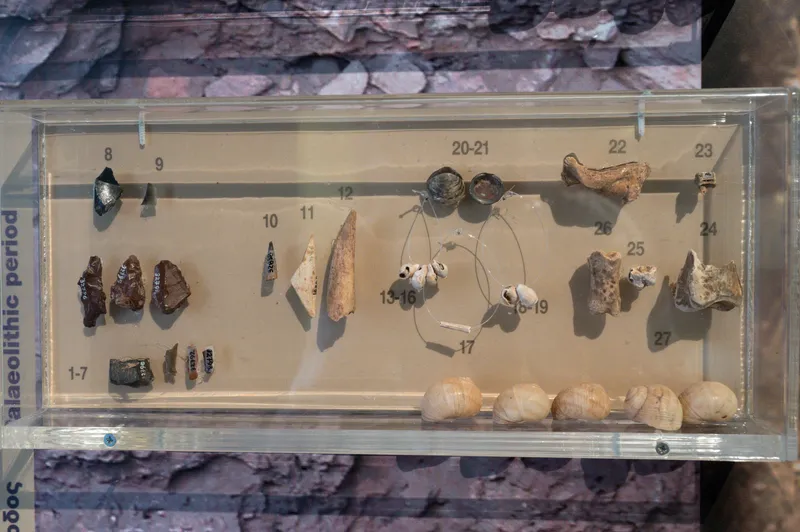
Image by Zde — CC BY-SA 4.0
- What: The crucial role of obsidian tools in early human hunting strategies.
- Where: East Africa
- When: Around 2 million years ago
- How: By utilizing razor-sharp edges made from volcanic glass
- Why: It highlights the intersection of innovation and survival in human history.
Modern Echo of a Sharp Prehistoric Secret
Imagine a sleek, black fragment of volcanic glass, shimmering under the sun. This seemingly simple piece of obsidian, often overlooked in the grand narrative of human innovation, played a crucial role in the success of early hunters. With edges honed to razor-like sharpness, these ancient tools transformed hunting strategies, resulting in an unprecedented increase in survival rates. Archaeological discoveries in Kenya reveal that some obsidian blades could cut through flesh with a precision that is hard to fathom. Yet, despite its significance, the question remains—how has such an impactful tool slipped through the cracks of common knowledge?
The Origins of Obsidian Mastery
In the heart of East Africa, around 2 million years ago, the first signs of human ingenuity emerged. Archaeological analysis from various sites in Kenya, notably around Lake Turkana, has uncovered lithic assemblages dominated by obsidian tools. These ancient artisans understood the unique properties of obsidian—a natural volcanic glass known for its ability to be fashioned into extraordinarily sharp blades. Notably, in 1974, researchers unearthed evidence indicating the prevalence of these crisp-edged implements in early human hunting strategies. However, the creation of such tools was not without controversy. The debate surrounding their effectiveness continues among experts. Some argue that while obsidian blades were indeed sharper than their stone counterparts, their brittleness posed a risk of shattering during use, leading to potential failures in critical moments—a tension between ingenuity and the limitations of materials. Thus, the presence of obsidian in early toolkits represents not just a step forward in technology but also a dance with the unpredictable nature of survival.
Lessons from the Lithics of Our Ancestors
The invention of obsidian tools resonates deeply in our modern world. As we stand on the shoulders of these early humans, it is fascinating to reflect on how their innovations have laid the groundwork for future technological advancements in material science. Today, while the context has transformed—advanced surgical blades and high-tech industrial applications utilize the same basic principles—we see the echoes of obsidian's sharp legacy in the precision tools and instruments we rely upon. In the vast landscapes of history, the story of obsidian tools reminds us of the elegance and complexity of our survival instincts. A sharp edge can mean the difference between life and death, survival and extinction; the sleek darkness of obsidian serves as a symbol of how innovation often stems from the most unexpected places.
Did You Know?
Some studies suggest that the sharpness of obsidian tools is comparable to modern surgical scalpels, making them invaluable in early human butchery.
In archaeological sites, obsidian tools are often found in abundance, hinting at their crucial role in the subsistence strategies of our ancestors.
The debate over the effectiveness of obsidian tools continues, with differing interpretations of their impact on early human survival in the paleoanthropological community.
Keep Exploring
CurioWire continues to uncover the world’s hidden histories — one curiosity at a time.
Sources & References
- National Museum of Kenya
- Journal of Archaeological Science
- Smithsonian Institution
As an Amazon Associate, CurioWire earns from qualifying purchases.