
🌍 Records from the halls of power
Coral Dreams Dissolve: The Hidden Crisis of Our Oceans
worldPublished 22 Dec 2025
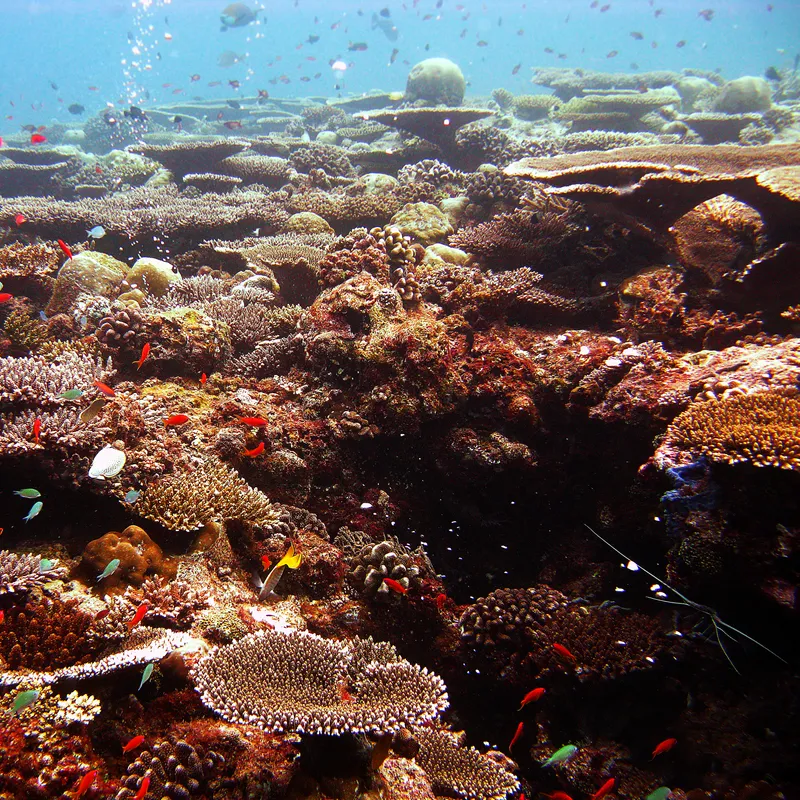
Image by Dr. Ondřej Havelka (cestovatel) — CC BY-SA 4.0
- What: Coral reefs, vital ecosystems often called the ocean's rainforests, are rapidly deteriorating due to climate change.
- Where: Global oceans
- When: Present day
- How: The phenomenon of coral bleaching is driven by rising ocean temperatures.
- Why: This crisis threatens marine biodiversity and coastal economies, highlighting the urgent need for global action.
Destruction of Coral Reefs Unfolds in Silence
Imagine vibrant underwater gardens—colorful coral reefs, often referred to as the ocean's rainforests—slowly fading into lifelessness. Recent satellite imagery reveals that coral bleaching is accelerating worldwide, a phenomenon caused by rising ocean temperatures that threatens marine biodiversity and coastal economies. As these intricate ecosystems dissolve, a chilling question lingers: how far will human societies go to secure their fishing rights and tourism in the wake of this unraveling crisis?
Marine Ecosystems Face a Grim New Reality
What lies beneath the waves has far more ramifications than most realize. Coral reefs, which support around 25% of all marine species, are not just homes for fish; they are fundamental to human livelihoods and coastal protection. According to a 2021 assessment from the United Nations, a startling wave of coral deterioration could ignite conflicts over fishing rights and tourism in vulnerable coastal regions. This scenario is rooted deep in systemic geopolitical problems, where environmental collapse intersects with economic desperation. The delicate balance between human needs and ecological sustainability threatens to shatter under pressure, leading to unforeseen outcomes driven by both resource scarcity and climate-induced migration. The disconnect between state responses and grassroots concerns exacerbates this evolving crisis, leaving nations ill-equipped to address the urgency at hand.
Echoes of This Crisis Resonate Worldwide
Today, the narrative of coral reefs serves as a poignant symbol of our global interconnectedness. As marine biologists and environmental activists watch these ecosystems falter, the implications extend far beyond scenic beaches. The ongoing degradation of coral reefs could result in a staggering economic loss, with an estimated value of $375 billion annually from fisheries and tourism reliant on thriving marine habitats. Research shows that the responsibility to act doesn't rest solely on coastal nations; it’s a global call to confront climate change through collaborative efforts and innovative policies. As the temperature of our oceans continues to rise, will we rise to the challenge and rethink our relationship with nature? This moment urges us to ponder: what will it take for humanity to safeguard not just our oceans, but our own future?
Did You Know?
Coral reefs cover only about 0.1% of the ocean's surface yet support nearly 25% of all marine species.
The economic value of coral reefs is estimated to be around $375 billion annually from tourism and fisheries, showcasing their critical role in coastal economies.
Over the past 30 years, researchers have documented that rising ocean temperatures have led to the worst coral bleaching events in history, impacting ecosystems worldwide.
Keep Exploring
CurioWire continues to uncover the world’s hidden histories — one curiosity at a time.
Sources & References
- United Nations Environment Programme
- National Oceanic and Atmospheric Administration
- Marine Conservation Society