
🌿 Stories carved by wind and water
The Secret Life Beneath Our Forests Revealed
naturePublished 10 Dec 2025
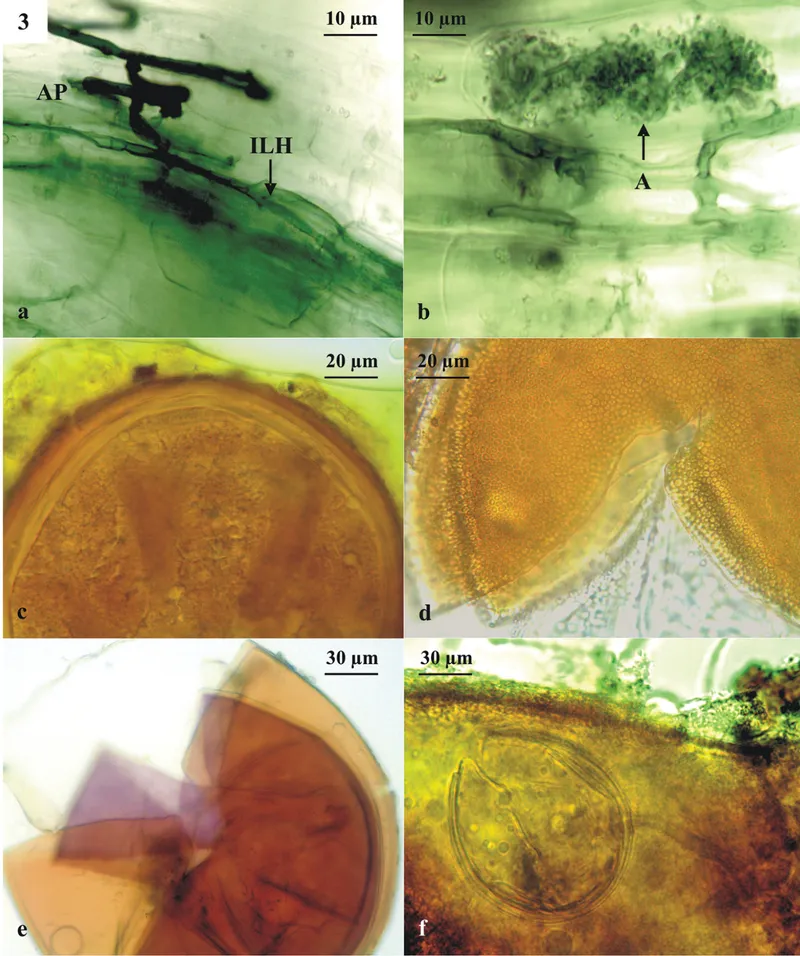
Image by Bidondo LF, Colombo RP, Recchi M, Silvani VA, Pérgola M, Martínez A, Godeas AM (2018) Detection of arbuscular mycorrhizal fungi associated with pecan (Carya illinoinensis) trees by molecular and morphological approaches. MycoKeys 42: 73-88. https://doi.org/10.3897/mycokeys.42.26118 — CC BY 4.0
- What: Trees communicate through mycorrhizal fungi, forming a complex underground network.
- Where: Forests worldwide
- When: Present day
- How: Mycorrhizal fungi connect tree roots, enabling nutrient sharing and communication.
- Why: Understanding these networks is vital for forest resilience amid climate change and human impact.
Whispers Beneath the Forest Canopy
Imagine a world where trees communicate in silent whispers, sharing not only nutrients but also warnings of danger. Beneath the thick green canopy, researchers have unveiled a hidden system wherein mycorrhizal fungi connect the roots of various tree species, creating an intricate network often referred to as the "wood wide web." This astonishing subterranean system plays a crucial role in forest health and resilience, highlighting an ecosystem built on collaboration rather than competition. How do these remarkable relationships shift our understanding of nature’s interconnectedness?
The Hidden Truth of Forest Communication
Within the depths of forest soil, a complex world thrives, unseen yet profoundly impactful. Mycorrhizal fungi extend their hyphae, weaving into the root systems of diverse tree species and forging bonds that facilitate nutrient sharing and vital communication. These networks serve as lifelines, especially for younger or struggling trees, enabling them to draw from the greater forest community for sustenance. Research suggests that trees can send distress signals through this underground network when under threat from pests or disease, alerting their neighbors even before danger approaches. This unexpected cooperation challenges the traditional understanding of forest ecosystems, which once depicted trees as solitary entities competing for sunlight and soil. Instead, they emerge as actors in a collaborative drama of survival, where the fate of one is intimately tied to the well-being of the whole.
Why This Knowledge Matters Today
In an era when forests face unprecedented threats from climate change and human activities, understanding these mycorrhizal networks is more critical than ever. Research indicates that these networks can enhance forest resilience, assisting in recovery from disturbances and stresses. For instance, ecosystems that maintain healthy mycorrhizal relationships show a 30% increase in overall biodiversity, underscoring the importance of preserving these connections. As we grapple with the reality of a warming planet, the knowledge that trees rely on one another may inspire new conservation strategies, framing forest management as a holistic venture rather than a fragmented one. Could it be that the wisdom of nature offers clues to our survival?
Did You Know?
Mycorrhizal fungi can connect trees of different species, creating a vast communication network that allows them to share nutrients and information about pests.
Some research suggests that forests with active mycorrhizal networks can exhibit greater resilience to environmental stressors, enhancing overall biodiversity.
In an astonishing display of cooperation, trees within mycorrhizal networks can send distress signals to their neighbors, alerting them to potential threats before they even arrive.
Keep Exploring
CurioWire continues to uncover the world’s hidden histories — one curiosity at a time.
Sources & References
- [Credible thematic source — archive, journal, museum, research body]
- [Secondary contextual source]
- [Optional tertiary source]