
🌿 Stories carved by wind and water
The Deceptive Orchid That Tricked Bees Into Mating
naturePublished 10 Dec 2025
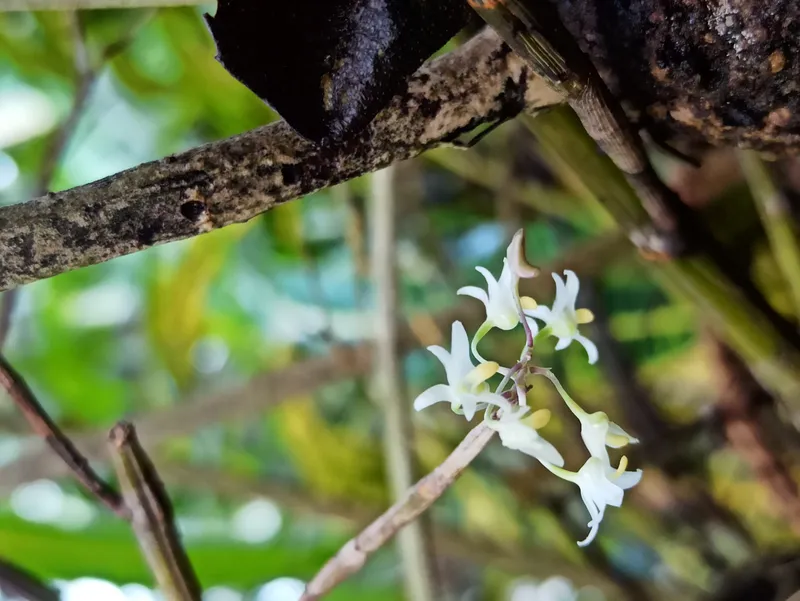
Image by Sindhu Haridas — CC BY-SA 4.0
- What: A remarkable species of orchid mimics female bees to attract male pollinators.
- Where: Amazon rainforest
- When: Present day
- How: By emitting specific scent compounds that create an irresistible illusion for male bees.
- Why: It highlights the intricate relationships between plants and pollinators, crucial for ecosystem balance.
A mesmerizing masquerade unfolds in the Amazon
In the heart of the Amazon rainforest, a striking deception is in full bloom—one that entangles its unsuspecting participants in a complex web of survival. Researchers have unveiled a remarkable species of orchid that possesses the uncanny ability to mimic both the appearance and the alluring scent of female bees. Astonishingly, this intricate ruse is not mere coincidence; it is a finely-tuned strategy that has evolved over generations. How does this floral trickery impact the balance of its ecosystem, and why does it matter to the life that flourishes around it?
Unveiling nature’s intricate deception in pollination
The interplay between the orchid and its bee pollinators is a captivating example of evolutionary artistry. Studies indicate that the orchid emits specific scent compounds, creating an irresistible illusion for male bees and fooling them into engaging in a mating ritual with a flower rather than seeking a mate of their own. This astonishing mimicry not only highlights the intricate adaptations of the orchid but also emphasizes its essential role in the ecosystem: cross-pollination. Without this elaborate masquerade, the vital exchange of genetic material between plants would falter, showcasing how interdependent relationships form the backbone of lush habitats like the Amazon. Researchers still debate the precise mechanisms of scent perception in these bees, revealing an untapped territory of wonder residing within these interactions.
Understanding the significance of this floral mimicry today
The legacy of this floral deceptor is more relevant now than ever, emphasizing the delicate balance in nature amidst rapid environmental changes. As global ecosystems grapple with climate shifts, the intricate relationships between plants and their pollinators face mounting stress. The interactions seen in these orchids serve as a poignant reminder of how interconnected life is, and how the survival of one species can hinge on the masterful illusions crafted by another. This knowledge invites us to reflect on our own connections to the natural world and to wonder: how many other hidden strategies may lie undiscovered in our planet's rich tapestry of life?
Did You Know?
Orchids belong to the diverse family Orchidaceae, which includes over 25,000 species worldwide, making it one of the largest families of flowering plants.
The mimicry techniques used by certain orchids to attract pollinators illustrate one of nature's most sophisticated survival strategies, showcasing how species adapt to thrive in their environments.
While most orchids rely on bees for pollination, this particular species demonstrates the surprising lengths to which plants will go, evolving mechanisms that fine-tune the scent and appearance to deceive unwitting males into their floral embrace.
Keep Exploring
CurioWire continues to uncover the world’s hidden histories — one curiosity at a time.
Sources & References
- Botanical research journal
- Environmental science archive
- Pollination studies database