
🌍 Records from the halls of power
Mozambique's Rapid Transition to Democracy After Civil Conflict
worldPublished 02 Dec 2025
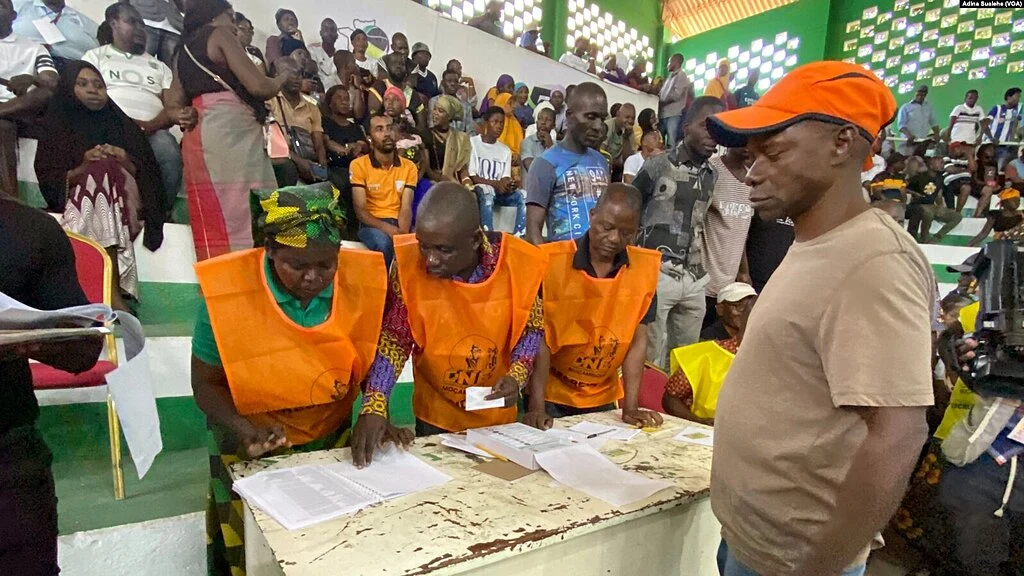
Image by VOA Português - Public domain
- What: Mozambique transitioned from civil war to democracy in 1990, leading to significant societal changes.
- Where: Mozambique
- When: 1990
- How: The country held its first multi-party elections, fostering political inclusivity and international support.
- Why: Mozambique’s experience offers insights into rapid post-conflict recovery and the potential for societal transformation.
A Remarkable Turnaround from Chaos to Democracy
In 1990, Mozambique emerged from a decade of destructive civil war, a nation teetering on the brink of collapse. This war, which started in 1977, left deep scars and displaced millions. Yet, in a surprising twist, the country prepared for its first multi-party elections, marking not only a political breakthrough but also igniting hope for a rapid societal transformation. Records suggest that this peaceful transition led to a significant reduction in poverty, challenging long-held beliefs about the time needed for nations to recover from conflict. How did Mozambique manage this extraordinary feat in such a short time?
Election Day: A New Dawn for Mozambique
On October 27, 1994, Mozambique’s first multi-party elections signified a pivotal change. The Frente de Libertação de Moçambique (FRELIMO) party, which had ruled since independence, faced genuine opposition for the first time from the Resistência Nacional Moçambicana (RENAMO) party. The elections were a gamble in the aftermath of a brutal conflict that had claimed over a million lives. Despite fears of violence, international observers noted the election's surprisingly smooth operation, with voter turnout exceeding 90%. The aftermath of these elections showcased something remarkable: by the late 1990s, Mozambique saw improvements in poverty rates, although specific figures vary. This rapid turnaround is a rare example in the annals of post-conflict recovery, which is often seen as a decades-long process. The success sparked global discussions about the potential for swift societal shifts when conditions align and highlighted the importance of cultural resilience amid turmoil.
The Lasting Importance of Mozambique’s Experience
The reason this matters today is that Mozambique’s experience reshapes our understanding of post-conflict recovery. It offers valuable insights into how political inclusivity and international support can lay the groundwork for rapid improvement in quality of life. Modern parallels can be drawn with nations like Rwanda, where reconciliation efforts following the 1994 genocide have also led to remarkable economic growth and governance improvements. Mozambique stands as a powerful example that challenges the notion that stability takes generations to build; instead, it demonstrates that societal revival can ignite almost overnight, given the right cultural and institutional supports. As we navigate the complexities of current global conflicts, this lesson resonates increasingly loud.
Did You Know?
In 1990, about 1.5 million Mozambicans were displaced due to civil war, yet the subsequent elections marked a commitment to rebuilding and reintegrating communities.
By 2016, Mozambique’s economy was one of the fastest-growing in Africa, driven by agricultural exports and foreign investments, following the democratic transition of the early 1990s.
International observers hailed Mozambique’s 1994 elections as a success story, presenting a beacon of hope for democratic processes in similar conflict-stricken nations.
Keep Exploring
CurioWire continues to uncover the world’s hidden histories — one curiosity at a time.
Sources & References
- [United Nations archives on Mozambique's civil war and elections]
- [Journal of African Studies — post-conflict recovery in Mozambique]
- [International Crisis Group — analysis of Mozambique's political transition]