
🎭 Fragments from the heart of civilization
The Alchemy of Brokenness in Kintsugi's Silent Wisdom
culturePublished 13 Jan 2026
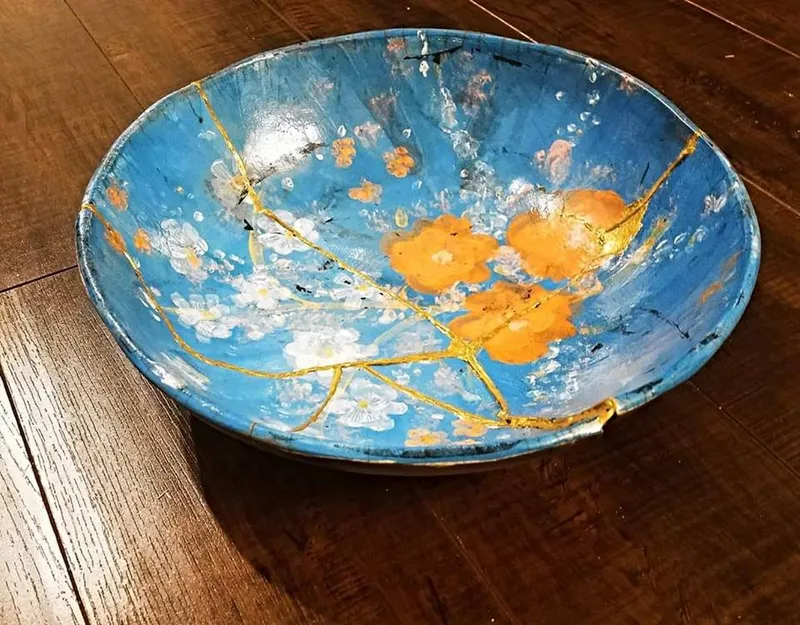
Image by Ruthann Hurwitz — CC BY-SA 4.0
- What: Kintsugi transforms shattered pottery into symbols of resilience by filling cracks with gold.
- Where: Japan
- When: Originating in the 15th century
- How: By highlighting imperfections with gold lacquer, Kintsugi reinterprets loss and trauma.
- Why: It emphasizes that brokenness can be an opportunity for beauty and connection.
The Art of Repairing With Golden Light
In a softly lit workshop in Japan, artisans breathe life back into shattered pottery, meticulously filling the cracks with gold. This practice, known as Kintsugi, is believed to have originated in the 15th century, transforming damaged vessels into breathtaking symbols of resilience. Each piece tells a story, not of failure, but of beauty forged from history, whispering secrets of how raw vulnerability can illuminate new beginnings. What lies beyond the fracture is a compelling narrative waiting to be discovered.
Fracture as a Catalyst in Cultural Transformation
Kintsugi embodies the profound cultural philosophy that from fracture, we forge new narratives. Originating in Japan, this tradition reflects a societal understanding that embraces loss and trauma as essential elements of the human experience. Rather than concealing imperfections, the gold lacquer accentuates them, showcasing how societies can reinterpret their histories — finding strength in vulnerability. The emergence of collective trauma responses reminds us that transformation through damage not only enhances value but also fosters deeper connections among individuals who share similar scars. The notion that brokenness may be seen as an opportunity rather than a flaw resonates universally, compelling us to see our own stories reflected in the cracked surfaces of life.
The Enduring Legacy of Kintsugi in Modernity
The echo of Kintsugi remains because its lessons transcend time, inviting contemporary creators to embrace imperfection in art and life. In an age fixated on perfection, this tradition rekindles a passion for authenticity, resonating with individuals and communities alike. Today, as we navigate personal and collective challenges, Kintsugi serves as a poignant reminder that our broken pieces can become our most cherished attributes. The beauty of transformation through adversity continues to sculpt our identities, offering solace in the understanding that our past, however fragmented, is an essential part of the splendid mosaic of life.
Did You Know?
Kintsugi is not only an art form but also a philosophy that encourages embracing one’s imperfections, illustrating a path toward self-acceptance.
Accidental breaks in ceramics were often seen positively in Japanese culture, as they provided opportunities for artistry to shine through imperfection.
The practice of Kintsugi may reflect broader societal resilience, with communities drawing strength from shared narratives of loss and recovery.
Keep Exploring
CurioWire continues to uncover the world’s hidden histories — one curiosity at a time.