
🧪 Echoes from the lab
Ferromagnetic Nanoparticles Rewrite Rules of Magnetization
sciencePublished 07 Jan 2026
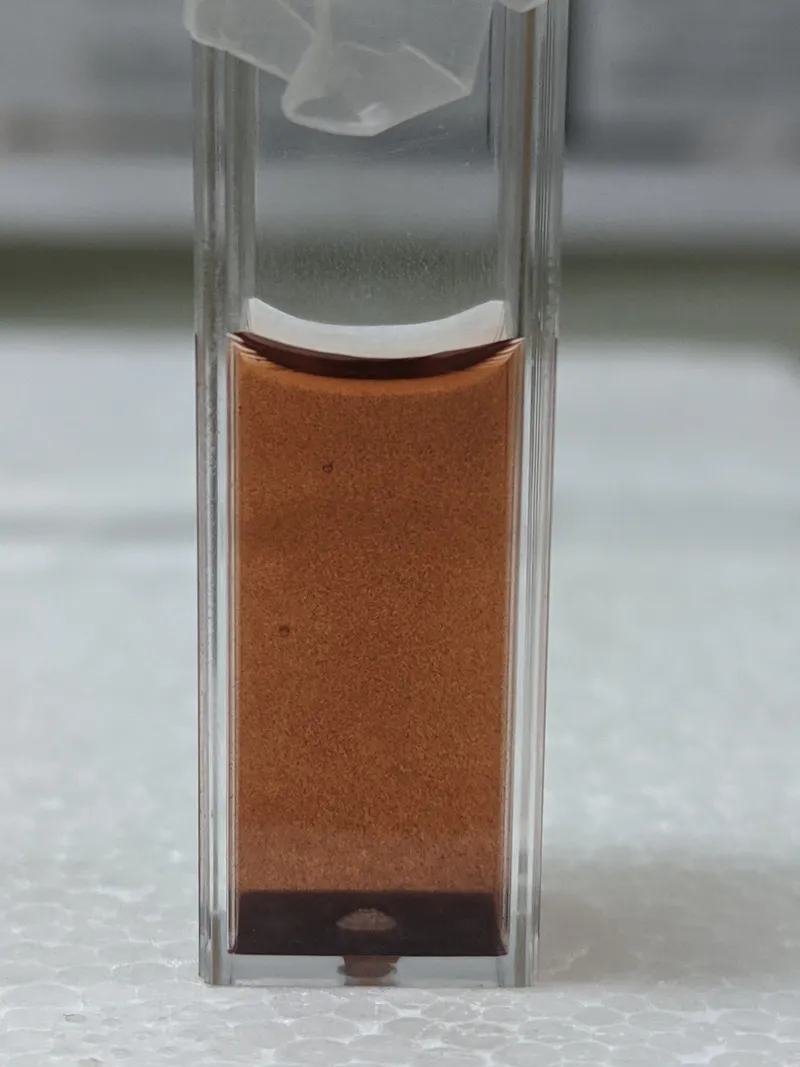
Image by Nadiia Honcharenko — CC BY 4.0
- What: Ferromagnetic nanoparticles exhibit unexpected magnetization at room temperature, challenging established magnetic theories.
- Where: In laboratories studying nanomagnetism
- When: Recent studies, particularly noted in 2021
- How: These nanoparticles display unique magnetic hysteresis loops that defy conventional temperature effects.
- Why: Their unusual properties could revolutionize technologies in data storage, medical imaging, and energy efficiency.
The Surprising Behavior of Tiny Particles
Imagine a world where the very fabric of magnetism behaves contrary to everything we thought we knew. Within the realm of nanomagnetism, scientists are confronting an astonishing reality: ferromagnetic nanoparticles reveal properties that seem to defy conventional understanding. A striking example comes from data collected in 2021, showcasing unique magnetic hysteresis loops that illustrate how these nanoparticles can exhibit unexpected magnetization at room temperature. How is it possible that tiny particles can challenge the foundational laws governing magnetism itself?
Unveiling a New Frontier of Magnetization
Researchers delving into the mysterious behavior of ferromagnetic nanoparticles have stumbled onto an empirical puzzle that has ignited extensive debate within the scientific community. These nanoparticles, typically measured in just a few nanometers, display magnetic hysteresis loops that refuse to conform to traditional magnetic theories. In conventional wisdom, increasing temperature demagnetizes materials; yet some studies describe ferromagnetic nanoparticles exhibiting robust magnetization even under such conditions. This phenomenon not only raises eyebrows but also fuels a growing interest in revisiting the principles of magnetism altogether. How is it that these nanoparticles are seemingly rewriting the rules, suggesting our understanding of magnetization is incomplete as it stands?
The Implications of Deviating from the Norm
The implications of these observations extend beyond mere scientific curiosity — they could reshape current technologies. Researchers studying these nanoparticles have documented unique magnetic properties that could lead to innovations in data storage, medical imaging, and even energy-efficient materials. As we stand on this threshold of discovery, the observation that magnetization defies conventional understanding compels us to rethink how we manipulate materials at the nanoscale. What if the secrets held by these tiny particles could revolutionize technology as we know it, offering solutions to problems we have yet to envision?
Did You Know?
In 2020, experiments revealed that ferromagnetic nanoparticles could retain magnetic properties at temperatures above 300 degrees Celsius, a temperature typically regarded as demagnetizing for most materials.
The unusual magnetic behavior of these nanoparticles is thought to arise from their unique surface properties and quantum effects that remain only partially understood.
Studies of nanoparticle magnetization have led scientists to theorize that these materials could be key players in next-generation quantum computing technologies.
Keep Exploring
CurioWire continues to uncover the world’s hidden histories — one curiosity at a time.
Sources & References
- American Physical Society
- Journal of Nanomaterials
- National Institute of Standards and Technology