
🎭 Fragments from the heart of civilization
The Celestial Alignments That Shape Sacred Spaces
culturePublished 25 Dec 2025
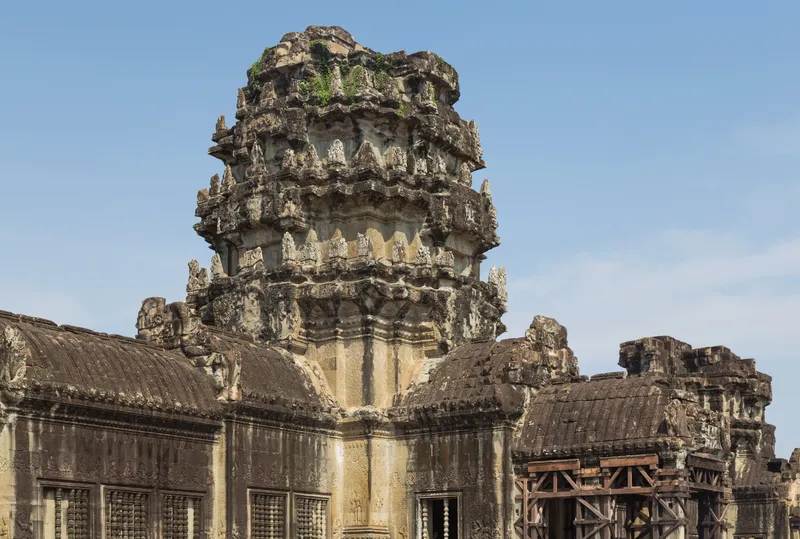
Image by Marcin Konsek — CC BY-SA 4.0
- What: The celestial alignments of Angkor Wat reveal how ancient cultures encoded their beliefs into architecture.
- Where: Cambodia
- When: 12th century
- How: Through meticulous alignment of structures with astronomical events like solstices and equinoxes
- Why: It highlights the profound connection between architecture, spirituality, and the cosmos.
Whispers of the Cosmos in Sacred Stones
Beneath the silhouette of ancient temples, where shadows dance under the watchful gaze of the sun, celestial alignments carve stories into the very stone. In the 12th century, the Khmer Empire erected Angkor Wat, a grand temple complex in Cambodia, meticulously aligning its structures with the stars, inviting visitors to marvel at the interplay of architectural precision and astronomical events. Hidden in the patterns of these sacred spaces lies a profound question: how do cultures transcribe their beliefs into the very fabric of their architecture?
Timeless Rituals Encoded in Celestial Geometry
Within the majestic walls of Angkor Wat, researchers have uncovered intentions that span millennia, revealing that the temple's layout mirrors celestial phenomena, such as solstices and equinoxes. It is not merely a site of worship but a celestial observatory where the heavens and earth converge, breathing life into myths that resonate deeply with the human experience. The intricate carvings, believed to communicate narratives of spirituality and existence, reflect a deeper truth: the cosmos not only inspires human creativity but also serves as a guide in our search for meaning. This intertwining of architecture and astronomy encapsulates a rare WOW-moment — the understanding that ancient civilizations, such as the Khmers, were not just builders but cosmic storytellers, using the alignments of the stars as a canvas upon which to paint their spiritual journeys.
Echoes of the Past in Modern Reverence
The legacy of Angkor Wat extends beyond its stones; it influences contemporary spiritual practices and cultural identities, grounding modern seekers in the wisdom of their ancestors. Today, festivals still celebrate the same celestial events the Khmer honored centuries ago, forging connections between past and present that remind us of our shared wonder. As we gaze up at the night sky, we become part of an ancient dialogue, a tapestry woven from culture, memory, and the celestial rhythms that guide our lives.
Did You Know?
The term 'archaeastronomy' originated to describe the study of how ancient peoples understood and utilized celestial bodies, revealing their deep connection to the cosmos.
Angkor Wat's intricate bas-reliefs depict a celestial journey, showcasing not just architectural prowess, but also an advanced understanding of the stars and planets that continues to inspire admiration.
During the Spring Equinox, visitors to Angkor Wat can observe the sunrise illuminating the temple’s central tower, an event celebrated for its spiritual significance, connecting ancient beliefs to contemporary experiences.
Keep Exploring
CurioWire continues to uncover the world’s hidden histories — one curiosity at a time.
Sources & References
- National Museum of Cambodia
- Journal of Astronomical History and Heritage
- Archaeological Institute of America