
🫀 Secrets of the human vessel
The Forgotten Story Behind London's Life-Saving Water Pump
healthPublished 10 Dec 2025
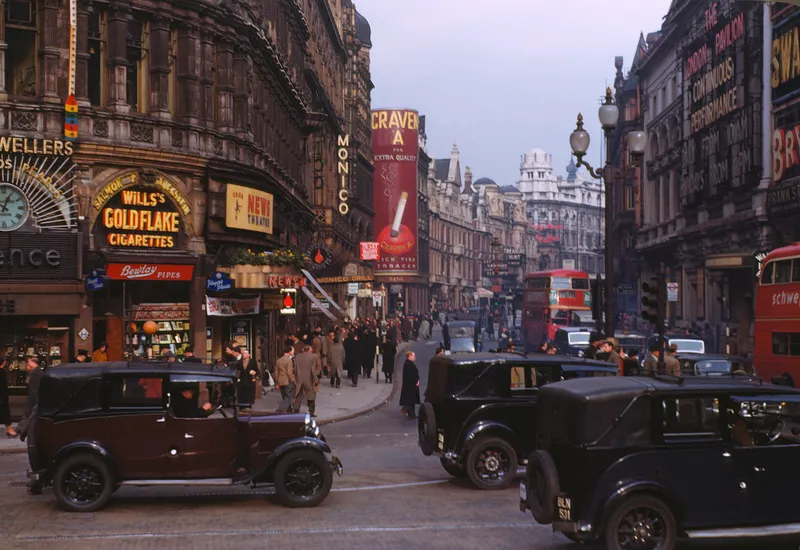
Image by Chalmers Butterfield — CC BY 2.5
- What: A single water pump in Victorian London became the focal point of a cholera outbreak, leading to groundbreaking public health advancements.
- Where: London, England
- When: Summer of 1854
- How: John Snow's investigation revealed that the pump's water supply was contaminated with raw sewage.
- Why: This event underscores the importance of understanding environmental factors in public health today.
How a Singular Pump Changed Public Health Forever
In the heart of Victorian London during the summer of 1854, a deadly cholera outbreak gripped the city, leaving behind a wake of fear and despair. Streets echoed with the panicked cries of families as the disease claimed lives by the hour. The shocking truth? A single water pump, innocently nestled on Broad Street, became the epicenter of this tragedy and ultimately a triumph in public health. How could something so ordinary become a beacon of hope amidst a staggering public health crisis?
The Astonishing Discovery of John Snow’s Investigative Genius
When the cholera outbreak struck, thousands fell ill in a matter of weeks, yet the cause remained elusive. However, physician John Snow saw through the chaos, meticulously mapping the afflicted areas and noticing a striking pattern. By pinpointing cases around the Broad Street pump, Snow unraveled a life-threatening mystery: the water supply was contaminated with raw sewage. After presenting his findings, authorities acted swiftly—removing the pump handle on September 8, 1854, effectively cutting off the source of cholera. This single infrastructure act contributed to a significant decline in cholera cases, demonstrating that public health hinged on understanding invisible threats like contaminated water. While the cholera death toll did decrease significantly after the removal of the pump handle, attributing a specific percentage to this action oversimplifies the complex factors involved in public health at the time. Snow's pioneering use of data mapping laid the groundwork for modern epidemiology, proving that the conditions of our environment significantly impact our health.
Echoes of the Past in Today’s Urban Health Challenges
The legacy of John Snow resonates in today's urban centers where water safety remains critical. Recent studies show that communities with better water management can reduce waterborne diseases, reflecting the lessons learned from the 19th century. The deeper truth is that even with today's advanced technology, we still grapple with sanitation issues and the threats of pollution. Snow's work reminds us of the importance of vigilance in public health efforts, prompting us to reflect on the infrastructure we sometimes take for granted. What have we yet to uncover about the invisible ties that affect our wellbeing?
Did You Know?
John Snow's map of cholera cases in London is considered one of the first examples of geographic information systems (GIS) used in public health.
After the removal of the Broad Street pump handle, the cholera death toll dropped significantly, illustrating the impact of public health interventions.
Snow's groundbreaking work contributed to the broader public health reforms that led to the establishment of the London Metropolitan Board of Works in 1855, which introduced comprehensive sewer systems across the city.
Keep Exploring
CurioWire continues to uncover the world’s hidden histories — one curiosity at a time.
Sources & References
- Historical archives of Victorian London
- Public health journals on the cholera outbreak
- Research studies on the impact of water management