
🌍 Records from the halls of power
How South Sudan's Borders Redefine Identity Amid Conflict
worldPublished 08 Dec 2025
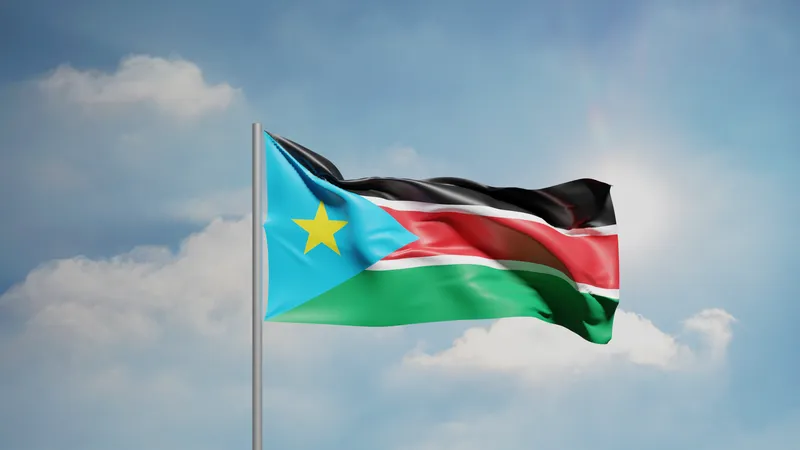
Image by Aerra Carnicom — CC BY-SA 4.0
- What: South Sudan's borders, established through conflict, significantly impact national identity.
- Where: South Sudan
- When: Since its independence in 2011
- How: The borders were drawn as part of the 2005 Comprehensive Peace Agreement, which failed to unify diverse ethnic groups.
- Why: Understanding these dynamics is crucial for addressing ongoing ethnic tensions and instability in the region.
The New Nation Struggles with Old Divisions
In 2011, South Sudan emerged as the world’s newest country after a long struggle for independence from Sudan, a conflict fueled by years of civil strife and colonial legacies. Its borders were drawn as part of the 2005 Comprehensive Peace Agreement, which aimed to resolve longstanding disputes but resulted in a country marked by the division of over 60 ethnic groups, whose histories and cultural ties often transcend the artificial lines formed by treaties and warfare. This raises a poignant question: how can national identity be defined when so many are left on either side of these imposed boundaries?
The Historical Conflicts Shaping South Sudan’s Borders
The creation of South Sudan’s borders was deeply influenced by a tumultuous history. Following decades of conflict, including the first civil war from 1955 to 1972 and the second civil war from 1983 to 2005, negotiations culminated in a peace agreement in 2005. This agreement, signed in Naivasha, Kenya, was intended to resolve disputes but did little to create a cohesive national identity. Instead, it preserved divisions while arbitrarily grouping numerous ethnic and cultural identities, leaving approximately 12 million people to navigate an identity beyond the lines drawn on a map. The irony lies in the fact that many communities, such as the Dinka and Nuer, find themselves divided by borders that do not respect traditional territorial claims or social alliances, highlighting how national identity can be shaped by historical conflict rather than geographical coherence.
The Legacy of Conflict Continues Today
The reason this matters today is that South Sudan’s ongoing struggles reveal the complexities of loyalty and belonging in a fractured national identity. Ethnic tensions remain palpable, as seen in the violent clashes that erupted in 2013, just two years after independence, fueled by political rivalries and ethnic divisions. Current researchers point to these divisions as both a cause and effect of instability, complicating reconciliation efforts. Issues surrounding citizenship, access to land, and governmental representation remain contentious as populations cling to their historical communal identities rather than a singular national identity. This juxtaposition between imposed borders and lived realities symbolizes a broader truth about nationhood: borders are often more about historical conquests than about the people who inhabit the land. The global community must reflect on how such artificial divisions contribute to ongoing strife and challenge our understanding of what it means to belong.
Did You Know?
In South Sudan, over 60 ethnic groups coexist within borders established through years of conflict, making the region a mosaic of diverse cultures.
The borders of many African countries, including South Sudan, were largely dictated by colonial powers during the late 19th and early 20th centuries, often ignoring existing tribal territories.
Despite its independence, South Sudan ranks high on the Global Peace Index, reflecting ongoing violence and instability, underscoring the complexities of identity and nationhood.
Keep Exploring
CurioWire continues to uncover the world’s hidden histories — one curiosity at a time.
Sources & References
- [United Nations — South Sudan Reports]
- [International Crisis Group — South Sudan Briefings]
- [African Union — Peace and Security Council Reports]