
🧪 Echoes from the lab
The Science Behind Iridescence in Peacock Feathers
sciencePublished 08 Dec 2025
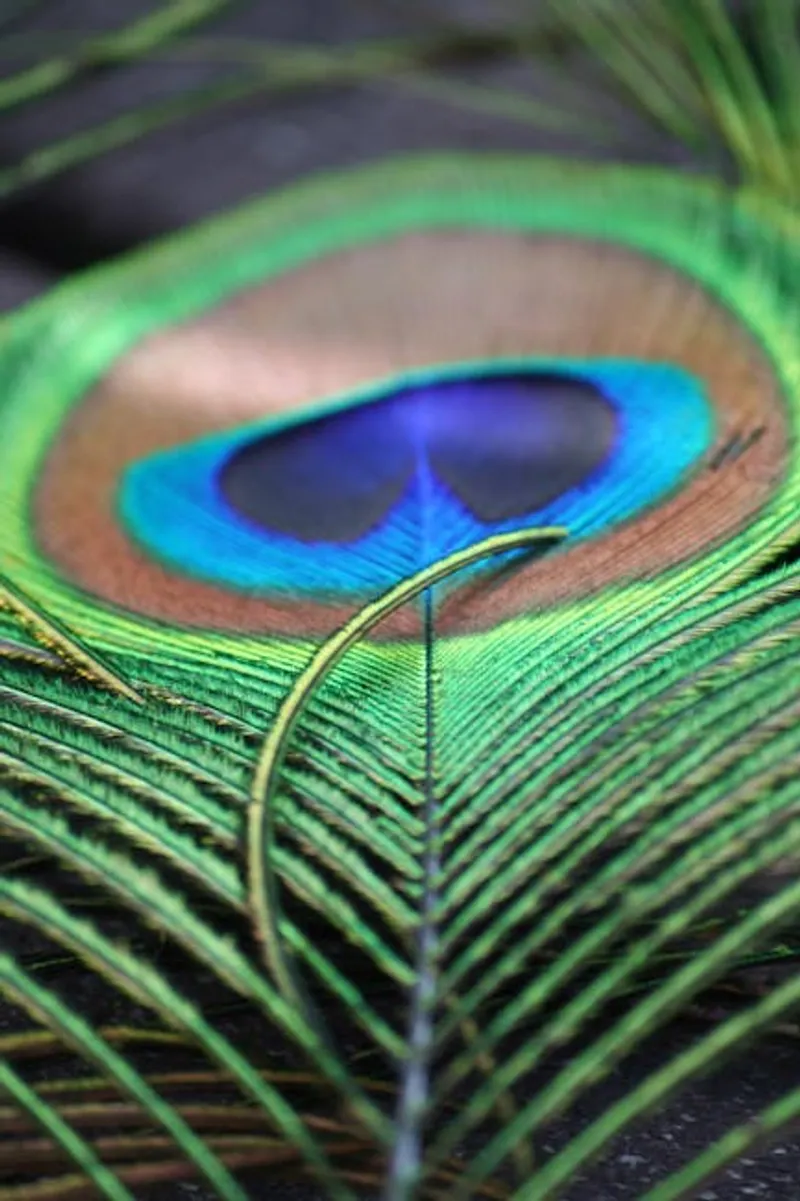
Image courtesy of Pexels
- What: The iridescence of peacock feathers results from microscopic structures that manipulate light, creating vibrant colors.
- Where: In the feathers of peacocks
- When: Throughout the evolution of peafowl
- How: Light interacts with layers of microscopic keratin, creating a diffraction grating effect that shifts colors based on viewing angles.
- Why: Understanding this phenomenon has inspired innovations in materials science and technology.
The Hidden World of Peacock Feather Colors
Peacocks are renowned for their strikingly beautiful tail feathers, shimmering with vivid greens and blues. During courtship displays, these iridescent hues dazzle onlookers, but the colors are not the result of pigments; they arise from complex interactions of light with microscopic structures within the feathers. Each feather contains layers of microscopic platelets that reflect and refract light, creating an optical illusion that makes the colors appear to change from different angles. How can such natural artistry be tied to the principles of physics?
Unveiling Microscopic Marvels in Nature
The phenomenon of iridescence in peacock feathers has been explored by various researchers who have examined its physical principles. The microscopic structures, primarily comprised of layers of microscopic keratin, create a complex diffraction grating effect when light strikes them. This interaction results in colors that shift depending on the viewing angle, similar to how light refracts in a prism, revealing a spectrum of hues. This intricate interplay between biology and physics highlights how biological structures have evolved to serve specific purposes — in this case, attracting mates while also serving as a defense mechanism against predators by introducing variability in appearance. What initially appears to be a simple act of nature transforms into a magnetic display of optical science, bridging the gap between living organisms and the laws of light.
The Impact of Iridescent Structures on Science
The reason this matters today is that the study of peacock feather iridescence has profound implications for various fields, including materials science and nanotechnology. Insights gained from these natural structures are inspiring engineers and designers to create new materials that mimic these properties, leading to innovations in optical devices and displays. For instance, research indicates that biosensors could become more efficient by utilizing light manipulation inspired by peacock feathers. In 2020, scientists at MIT developed a new super-hydrophobic coating for surfaces that discourages water build-up by mimicking the structure of these feathers. Such advancements demonstrate how nature’s designs can lead to innovative solutions in technology, reinforcing the connection that exists between the natural world and human ingenuity.
Did You Know?
The stunning iridescence of a peacock's feathers is not created by pigments but through microscopic structures that manipulate light, creating brilliant colors.
Some species of butterflies also display iridescence caused by structural coloration, using microscopic scales to effectively reflect and refract light.
The study of iridescent biological structures has led to advances in technology, including new types of display screens and coatings inspired by natural phenomena.
Keep Exploring
CurioWire continues to uncover the world’s hidden histories — one curiosity at a time.
Sources & References
- Journal of Optical Society of America
- Nature Communications
- Materials Science and Engineering Reports