
🌿 Stories carved by wind and water
How Douglas Fir Trees Form Resilient Forest Communities
naturePublished 08 Dec 2025
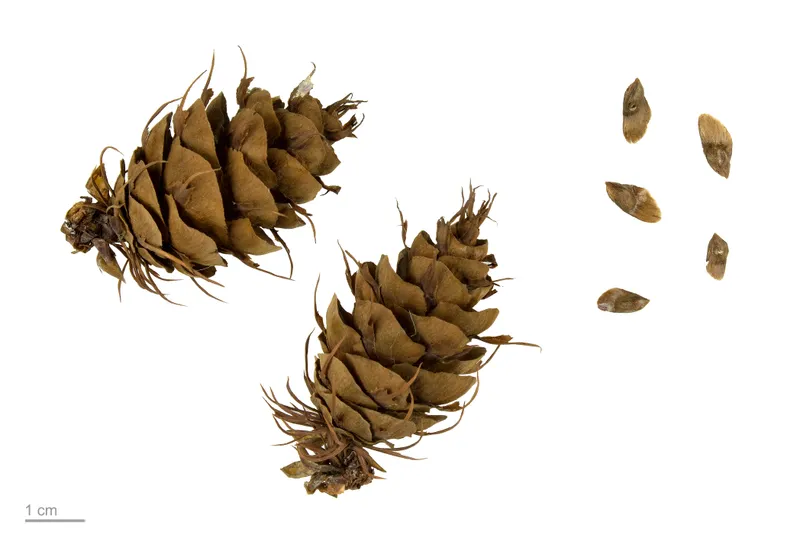
Image by Roger Culos - CC BY-SA 3.0
- What: Douglas fir trees use underground fungal networks to communicate and share resources with neighboring plants.
- Where: Coastal rainforests of British Columbia
- When: Present day
- How: Through mycorrhizal networks that facilitate nutrient exchange and distress signaling among trees
- Why: Understanding these interdependencies can inform forest management strategies in the face of climate change.
Fungal Networks Forge Unseen Connections Among Trees
In the heart of ancient forests, towering Douglas firs stand sentinel, their thick bark shielding secrets hidden beneath the soil. Records suggest that these trees engage in a complex communication network, sharing vital information and resources through underground fungal mycelium. This relationship creates a "halo" effect, influencing not just their own health but also the vitality of neighboring plants. How do these majestic beings transform their environment through this clandestine cooperation?
Nature's Remarkable Communication Systems Unfold
Research conducted by scientists at the University of British Columbia highlights a fascinating phenomenon: Douglas firs can send distress signals to surrounding trees when they are attacked by pests. These insights were gleaned from studies in coastal rainforests, where mycorrhizal networks connect various trees, allowing them to share nutrients and alert each other to threats. For example, when a Douglas fir succumbs to an insect invasion, it releases chemical signals that travel through the fungal networks, alerting its neighbors. In response, these trees ramp up their own defenses, producing toxins that deter the pests. A remarkable finding from this study reveals that over 50% of trees in such forests rely on these mycorrhizal connections for nutrient exchange and protection. This communal resilience challenges our longstanding view of nature as a solitary struggle for survival, urging us to consider the cooperative strategies essential in dense ecosystems.
The Ripple Effects of Tree Communication in Today's Forests
The reason this matters today is that understanding these complex interdependencies can influence how we manage forests in the face of climate change and ecological damage. Just as we learned that trees help each other survive, we can apply this knowledge to the restoration of ecosystems. Current trends in forest management are beginning to consider these networks, promoting strategies that mimic natural connections and encourage biodiversity. For instance, reforestation efforts are increasingly acknowledging the power of mycorrhizal fungi to establish resilient communities. This approach not only nurtures individual species but supports a collective health that can withstand environmental stresses. The astounding interconnectedness of trees reminds us that even the mightiest organisms thrive through cooperation and shared strength, urging us to rethink human societal structures in light of nature's wisdom.
Did You Know?
Some trees, including the Douglas fir, can communicate their need for water and nutrients to neighboring trees through fungal networks, enhancing overall forest health.
Mycorrhizal fungi have been found to connect plants across species, making entire ecosystems more resilient to environmental stressors like drought and disease.
Research indicates that forests with higher diversity of tree species benefit more from these fungal networks, leading to improved growth rates and healthier ecosystems overall.
Keep Exploring
CurioWire continues to uncover the world’s hidden histories — one curiosity at a time.
Sources & References
- University of British Columbia Research Archive
- Journal of Ecology and Forest Management
- International Society of Mycorrhizae Studies