
⚙️ Traces from the dawn of innovation
Bridging Thought and Action: The Pioneering Brain-Computer Interface
technologyPublished 02 Dec 2025
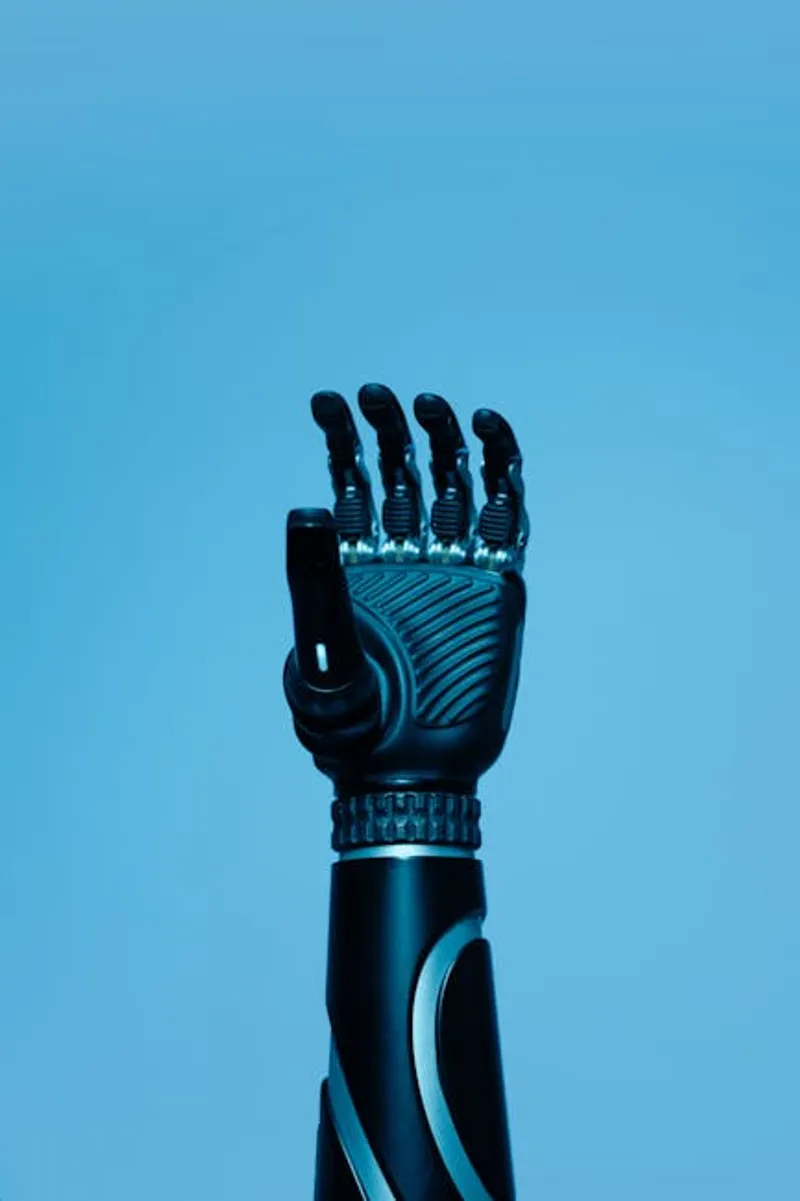
Image courtesy of Pexels
- What: Recent advancements in brain-computer interfaces (BCIs) allow individuals with paralysis to control robotic arms using their thoughts.
- Where: Various research institutions
- When: Recent years
- How: Electrodes implanted in the brain translate neural signals into digital commands.
- Why: These developments could restore autonomy to individuals with disabilities and reshape our understanding of human capability.
The Revolutionary Moment in Mind-Machine Interaction
In a world where human ability often seems confined by physical limitations, a groundbreaking demonstration in recent years challenged that notion. Researchers have made significant advancements in brain-computer interfaces (BCIs) that enable individuals with paralysis to control robotic arms through thought. These incredible feats have achieved movement precision that approaches natural arm control, marking a shift in our understanding of human cognition and interaction with technology. As these astonishing events unfold, they raise questions about the future of communication and the very essence of what it means to be human.
The Intersection of Neuroscience and Robotics
Recent breakthroughs in BCI technology are the culmination of years of research and development in the field. This technology involves implanting electrodes in specific areas of the brain, allowing neural signals to be translated into digital commands. In various studies, participants have displayed remarkable resilience and adaptability as they learned to control robotic arms. With high accuracy, they could perform tasks such as reaching for an object or sipping from a cup—actions many take for granted. Such precision blurs the lines between human cognition and machine interaction, showcasing how technology can become an extension of oneself rather than a separate entity. This leap is reminiscent of the early days of computer science when pioneers like Douglas Engelbart envisioned seamless interaction between humans and machines, forever altering the technological landscape.
Echoes of Change in Today’s Technological Landscape
The reason this matters today is that it not only highlights the potential of brain-computer interfaces to restore autonomy to individuals with disabilities but also challenges our understanding of human capability. A recent report from the World Health Organization estimates that over 1 billion people worldwide live with some form of disability, many of whom could benefit from advancements in assistive technologies. The BCI technology may represent a new frontier in augmenting human abilities, reshaping the future of rehabilitation and human-machine collaboration. As we stand on the brink of merging thought with action more seamlessly than ever, we are confronted with ethical and philosophical dilemmas about agency, identity, and what enhances the human experience altogether.
Did You Know?
In recent years, brain-computer interfaces have been explored for various applications, including allowing individuals to control drones using their thoughts, illustrating the immense potential of BCI technology in industries beyond healthcare.
The first BCI was developed in the early 1960s, with scientists at the University of California, Los Angeles, exploring ways to transmit signals from the brain to a computer, laying the groundwork for future advances in thought control.
According to a study by the National Institutes of Health, a significant percentage of potential candidates for BCI technologies express willingness to undergo surgical procedures to regain mobility, highlighting the urgency and desire for such breakthroughs.
Keep Exploring
CurioWire continues to uncover the world’s hidden histories — one curiosity at a time.
Sources & References
- World Health Organization
- National Institutes of Health
- University of California, Los Angeles