
🫀 Secrets of the human vessel
The Surprising Effect of Heat on the Eiffel Tower's Height
healthPublished 29 Nov 2025
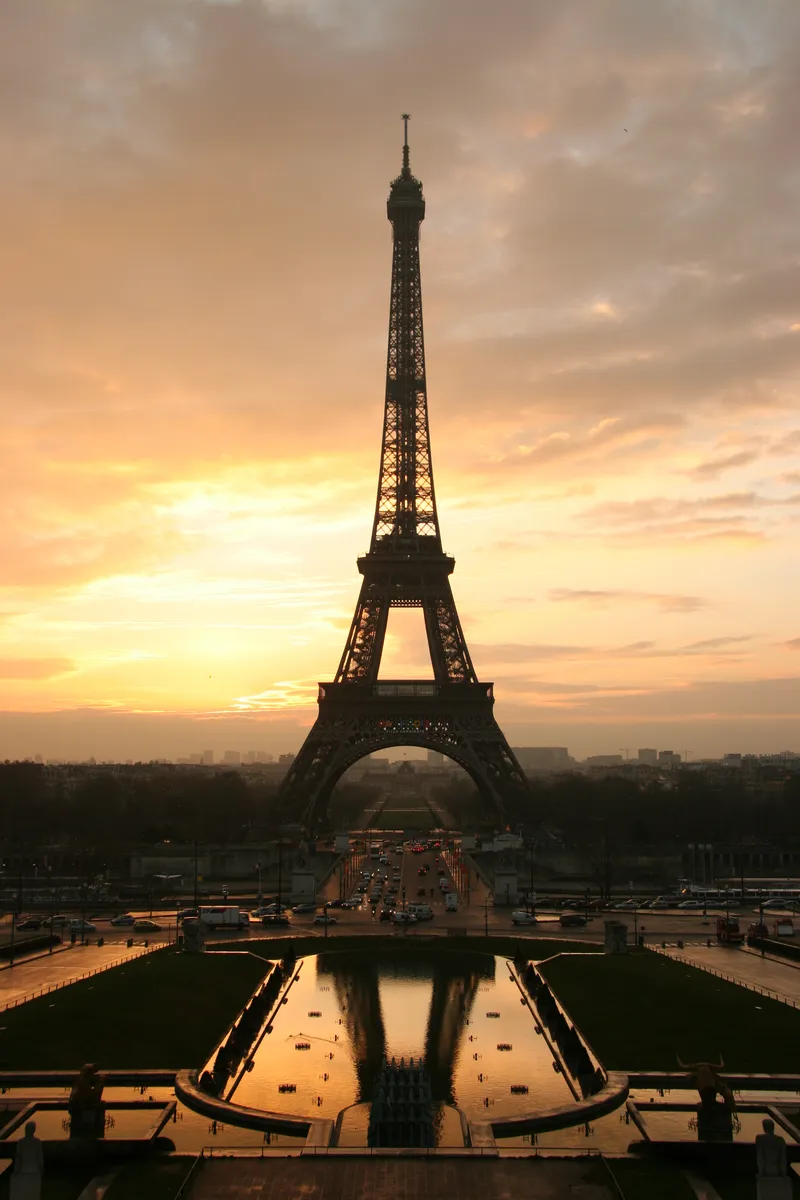
Image via Wikimedia Commons
- What: The Eiffel Tower expands by up to 15 centimeters (six inches) during hot summer days due to thermal expansion of its iron framework.
- Where: Paris, France
- When: Late 19th century to present
- How: The iron structure of the tower expands when heated, resulting in a measurable increase in height.
- Why: Understanding thermal expansion is crucial for engineering and highlights how small environmental changes can impact both structures and human health.
The Art of Expansion: Eiffel Tower’s Summer Transformation
On hot summer days in Paris, the Eiffel Tower transforms into more than just a tourist destination; it becomes a living testament to the laws of physics. As the sun beats down, this iconic structure can grow by as much as 15 centimeters (six inches) due to the thermal expansion of its iron framework. This fascinating phenomenon occurs because metal expands when heated, leading to a measurable change in height. The question arises: how does such a seemingly minor change resonate through time and enhance our understanding of material resilience?
Uncovering Science: Thermal Expansion and Its Historic Impact
In the late 19th century, Gustave Eiffel, a visionary engineer, meticulously designed the tower with iron, fully aware of its properties and behavior under varying temperatures. Documented measurements reveal that during peak summer months, the tower can exceed a height of 300 meters due to the expansion of its iron structure. The significance of this scientific discovery extends beyond the tower itself; it serves as a foundational principle in engineering, emphasizing the need for adaptability in structural design. The lessons drawn from Eiffel's construction processes resonate today, particularly in the context of climate change, where rising temperatures challenge the integrity of materials used in everything from bridges to skyscrapers. This adaptability reflects a broader theme: even small changes can lead to significant consequences—much like the physiological responses of humans to minor stressors, challenging the notion that only major events shape our health.
The Lasting Relevance of Temperature's Effects Today
This issue remains pertinent today due to our growing understanding of how environmental factors, such as temperature, affect both materials and biological systems. Recent studies, including those conducted by the American Psychological Association in 2020, highlight that even minor daily stresses can lead to chronic health issues over time, much like how consistent exposure to heat affects the structural integrity of materials. This parallel illustrates how small, often overlooked elements—whether temperature fluctuations or daily stressors—can intricately alter our physical and mental health, revealing a shared vulnerability between manmade structures and the human body. As we design our cities and manage our well-being, recognizing these seemingly minimal factors can empower us to thrive in an increasingly volatile world.
Did You Know?
The Eiffel Tower was completed in 1889 as a temporary exhibit for the World's Fair, yet it became a permanent icon of Paris. Thermal expansion isn't unique to iron; many materials, such as concrete and glass, also change in size with temperature fluctuations. During winter, the Eiffel Tower contracts, making it up to 15 centimeters shorter due to the cold.
Keep Exploring
CurioWire continues to uncover the world’s hidden histories — one curiosity at a time.
Sources & References
- American Psychological Association. (2020). Effects of temperature on health and well-being.
- Engineering Toolbox. Thermal Expansion of Materials.
- Gustave Eiffel: The Man Who Built the Eiffel Tower. (2019). Paris Historical Society.