
🌿 Stories carved by wind and water
Sea Turtles Return Home Using Earth's Magnetic GPS
naturePublished 29 Nov 2025
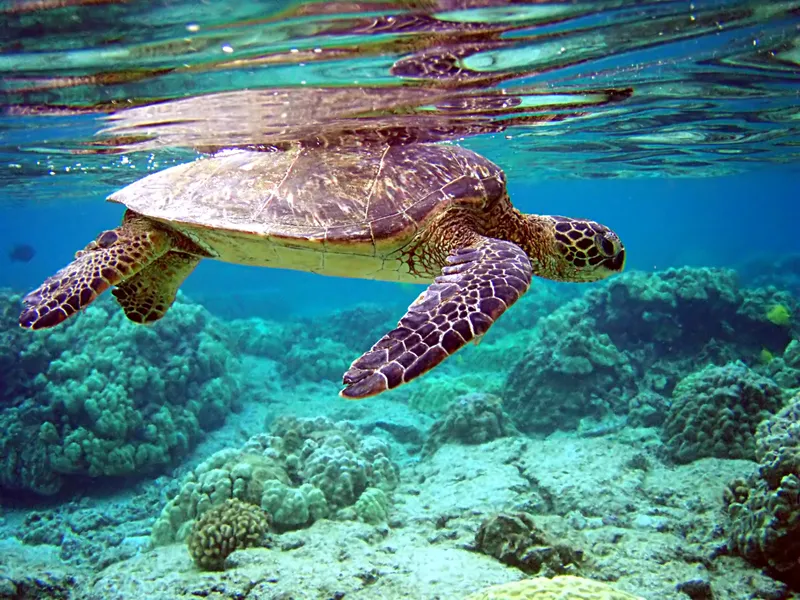
Image via Wikimedia Commons
- What: Sea turtles embark on extraordinary migrations, returning to their birthplace using Earth's magnetic field as a navigational guide.
- Where: Across the world's oceans, particularly from Florida and the Caribbean to Japan.
- When: Every year, with some migrations spanning decades.
- How: By detecting specific magnetic signatures and mapping the ocean's magnetic array.
- Why: Their journey highlights the resilience of nature and underscores the urgent need for conservation amid modern threats.
The Astonishing Journey of Sea Turtles
Every year, some species of sea turtles embark on an incredible oceanic voyage, traveling thousands of miles to return to the beaches of their birth. This remarkable journey can span decades and involves navigating the vast, treacherous waters of the Earth's oceans. Remarkably, these ancient creatures find their way back to the exact stretch of sand where they hatched, employing the Earth’s magnetic field as their guiding compass—an unfathomable skill that seems to defy logic. How do they accomplish such a miraculous feat?
Unlocking the Mysteries of Migration
In the early 1980s, marine biologists began piecing together the hidden truths behind sea turtle navigation. Researchers from the loggerhead turtle project, led by Dr. Kenneth L. Nisbet at the University of North Carolina, discovered that these magnificent creatures could detect the Earth's magnetic fields with remarkable precision. Turtles can recognize specific magnetic signatures distinct from their home beaches, enabling them to undertake their epic migrations. In a groundbreaking study, it was revealed that young loggerhead turtles migrate over 7,800 kilometers (around 4,800 miles) to reach the waters near Japan from their nesting sites in Florida and the Caribbean. Yet, these turtles are not solely guided by ocean currents or distant celestial bodies; they possess an innate ability to "map" the ocean using the magnetic array around them, as though all this geography is a celestial map within their minds. This incredible adaptation likely evolved so these reptiles could thrive, finding safety in their ancestral habitats—a strategy that has served them well for millions of years. Even more astonishing is the fact that the turtles may adjust their route based on variations in the Earth’s magnetic field due to changes in ocean temperatures or geomagnetic patterns.
The Lessons of Nature and Their Significance Today
The significance of this phenomenon today lies in the fact that sea turtles embody resilience in the face of modern challenges. While these creatures can navigate effortlessly across oceans, many populations now confront threats from climate change, pollution, and habitat destruction. For instance, research indicates that approximately 70% of sea turtle nests in regions like Florida have been adversely affected by rising sea levels. Today, conservation groups, including the Sea Turtle Conservancy, work tirelessly to protect nesting sites and raise awareness about the importance of preserving these vital ecosystems. By understanding the intricate connections of migration and survival, we deepen our awareness of our responsibility toward the natural world. The migration of sea turtles is more than just a fascinating biological phenomenon; it serves as a reminder of the delicate balance in nature and the profound impacts humans can have. These remarkable journeys inspire us to ponder the secrets of nature yet to be unveiled.
Did You Know?
Some sea turtle species are known to migrate over 2,000 miles in a single journey. Researchers believe green sea turtles can live to be over 80 years old, with some even reaching over 100. Despite their deep-sea adventures, female sea turtles return to land only to lay eggs, showcasing their unique lifecycle.
Keep Exploring
CurioWire continues to uncover the world’s hidden histories — one curiosity at a time.
Sources & References
- National Oceanic and Atmospheric Administration (NOAA) — Sea Turtle Conservation
- Marine Turtle Research Group — University of North Carolina
- World Wildlife Fund (WWF) — Sea Turtle Migration Patterns