
🧪 Echoes from the lab
How Mount St. Helens Surprised Scientists After Nearly Two Decades of Quiet
sciencePublished 29 Nov 2025
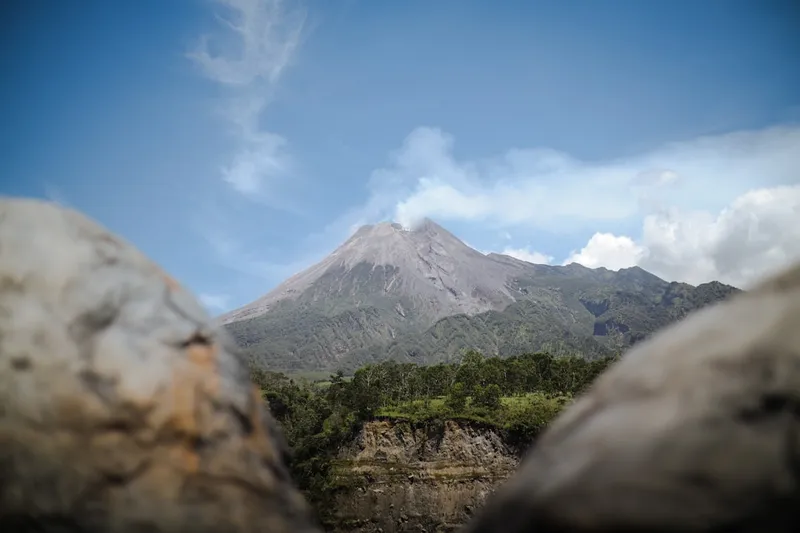
Image courtesy of Unsplash
- What: Mount St. Helens erupted on October 1, 2008, after 18 years of dormancy, challenging existing assumptions about volcanic behavior.
- Where: Pacific Northwest, USA
- When: October 1, 2008
- How: A series of eruptive events produced an ash plume over 6,000 feet high and expelled 1.6 million cubic meters of lava.
- Why: The eruption underscores the need for continuous reassessment of volcanic activity, as many dormant volcanoes may pose hidden dangers.
The Eruption That Shook Volcanology's Foundations
In the chill of a Pacific Northwest morning on October 1, 2008, the dormant landscape around Mount St. Helens suddenly transformed. After an astonishing 18-year period of silence, the volcano awakened with a force that astounded scientists. This moment was not merely a geological occurrence; it signaled a profound shift in our understanding of volcanic behavior. Previously, experts operated under the assumption that long periods of inactivity indicated a stable volcano. However, St. Helens had other plans, challenging the notion that "quietness" equates to safety in the seismically active Cascades.
Unveiling the Secrets of Magma Behavior
Prior to the 2008 eruption, Mount St. Helens had remained largely silent since its last explosive phase in 1980, which devastated surrounding ecosystems and human settlements alike. Researchers at the United States Geological Survey (USGS) monitored the volcano closely, interpreting this quiescence as a sign of stabilization. However, on October 1, a series of eruptive events began, culminating in a spectacular ash plume that soared over 6,000 feet into the atmosphere. This eruption not only rekindled fears but also ignited questions regarding the magma's behavior beneath the surface. The 2008 event resulted in over 1.6 million cubic meters of lava being expelled, reshaping the landscape once again.
The unexpected nature of Mount St. Helens' eruption necessitated a reevaluation of volcanic eruption models. Researchers recognized that magma dynamics could behave unpredictably, where extended periods of dormancy might indicate a buildup of pressure, leading to a more violent expression when finally released. This phenomenon parallels recent investigations across various global volcanoes, fostering a heightened awareness that "dormant" does not equate to "safe.”
The Ongoing Quest for Understanding Volcanic Activity
The significance of this event today lies in the 2008 eruption of Mount St. Helens serving as a cautionary tale for volcanologists and policymakers alike. It underscores the importance of continuously reassessing our understanding of volcanic behavior. For instance, the recent unrest at Kīlauea in Hawaii has raised similar questions about the potential for sudden, hazardous activity following a period of quiescence. Current studies suggest that nearly 75% of the world's active volcanoes could present similar surprises, wherein long periods of rest may mask underlying tectonic movements.
Such insights emphasize that the relationship between time and eruptions is more complex than previously believed. Instead of merely waiting for visible signs of magma movement, modern scientists are employing advanced technologies, such as satellite monitoring and ground deformation studies, to gain a clearer picture of subterranean changes. What remains constant is the profound unpredictability of these natural forces, prompting deeper reflection on our place within a dynamic Earth.
Did You Know?
- The eruption of Mount St. Helens in 1980 was the deadliest volcanic event in U.S. history, claiming 57 lives. - Some of the ashes from the 2008 eruption reached as far as the Midwest, covering states thousands of miles away. - Contrary to popular belief, not all volcanoes erupt with explosive force; some, like Kīlauea, tend to produce gentle lava flows.
Keep Exploring
CurioWire continues to uncover the world’s hidden histories — one curiosity at a time.
Sources & References
- United States Geological Survey (USGS) — Mount St. Helens Eruption Reports
- Smithsonian Institution — Global Volcanism Program
- National Park Service — Mount St. Helens National Volcanic Monument