
🌍 Records from the halls of power
The Forgotten Survivor Who Linked Centuries of Maritime Tragedy
worldPublished 21 Nov 2025
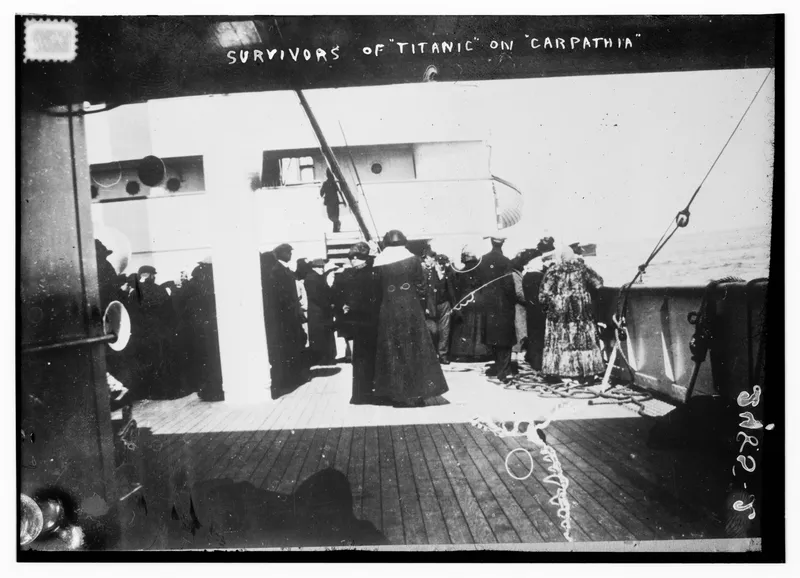
Image via Wikimedia Commons
- What: Millvina Dean, the last living survivor of the Titanic, represents a poignant link between the maritime tragedy of 1912 and contemporary discussions on historical grievances.
- Where: North Atlantic Ocean, site of the Titanic disaster
- When: 1912 and its centennial in 2009
- How: Dean's survival and storytelling illuminate the ongoing impact of historical events on modern diplomacy.
- Why: Understanding her legacy encourages reflection on how past conflicts shape current geopolitical tensions and the importance of addressing them for future peace.
A Time Traveler Among the Waves of History
Imagine standing on the deck of a stricken ship, echoes of the past swirling around you as you witness history unfolding across generations. In 2009, the world bid farewell to Millvina Dean, the last living survivor of the Titanic, whose life spanned the entire century separating her birth from the ill-fated voyage in 1912. This poignant intersection of timelines invites us to ponder what it might mean if today's leaders could meet their historical counterparts, perhaps illuminating paths toward reconciliation and peace from the wreckage of past grievances.
Millvina Dean and the Legacy of the Titanic
Born on February 2, 1912, Millvina Dean was just two months old when the Titanic tragically sank on its maiden voyage, taking more than 1,500 souls into the icy embrace of the North Atlantic. The ship, touted as "unsinkable," became a symbol of human hubris. As a survivor, Dean carried a narrative remarkably intertwined with the century-long legacy of maritime tragedy. Records indicate that she was rescued from the disaster by lifeboat number 10 and spent her subsequent years living with the shadows of that fateful night.
Through the decades, Dean recounted her story, shedding light on the broader implications of the Titanic tragedy: loss, societal change, and a desperate need for improved maritime safety. In 1998, she attended a Titanic memorabilia exhibit in the United Kingdom, bringing her story to a new generation captivated by the allure of the ship's history. With each recounting, Dean did not simply share a tale of survival; she acted as a bridge between past and present, reminding us that history is alive in the stories we tell.
Dean's death in 2009, the monumental year marking the Titanic's centennial, accentuates the profound relationship between time, memory, and conflict. As nations grapple with their historical grievances, her life serves as a testament to the necessity of recognizing our past to forge pathways toward diplomacy and understanding. By conceptualizing a meeting of current leaders with historical figures, one could envision transformative dialogues emerging from the depths of shared struggles and triumphs.
Understanding Connections Across Time
This relevance persists today, as history is not merely a series of events confined to textbooks; it shapes our current geopolitical landscape in profound ways. The patterns of conflict and resolution from the past echo through time, affecting how nations negotiate borders, resources, and alliances. As geopolitical tensions rise in regions such as the South China Sea or Eastern Europe, we are reminded of the importance of historical context in diplomacy.
For example, in today's increasingly polarized world, the insights that can emerge from understanding past grievances are invaluable. A study by the European Council on Foreign Relations in 2021 found that nearly 84% of current conflicts reawaken historical animosities, suggesting that without addressing these deep-rooted issues, peace remains elusive. Just as Dean's story highlights the lessons learned from maritime mishaps, an initiative aimed at bringing leaders from conflicting nations together could facilitate discussions shaped by past experiences. The ability to empathize with historical suffering could unlock new approaches to resolving modern disputes.
Did You Know?
Incredibly, nearly 50% of Titanic passengers were non-crew members who did not survive the disaster. The Titanic wreck lies approximately 12,500 feet below sea level, a stark reminder of the tragedy’s final resting place. Millvina Dean was only eight weeks old when the Titanic sank, making her survival a rare glimpse into history's narrative.
Keep Exploring
CurioWire continues to uncover the world’s hidden histories — one curiosity at a time.
Sources & References
- The National Archives — Titanic Records
- European Council on Foreign Relations — Historical Grievances and Modern Conflicts
- BBC History — The Titanic: A Century of Lessons