
🛍️ Artifacts of human ingenuity
The Camouflage Pattern that Transformed Warfare and Design
productsPublished 21 Nov 2025
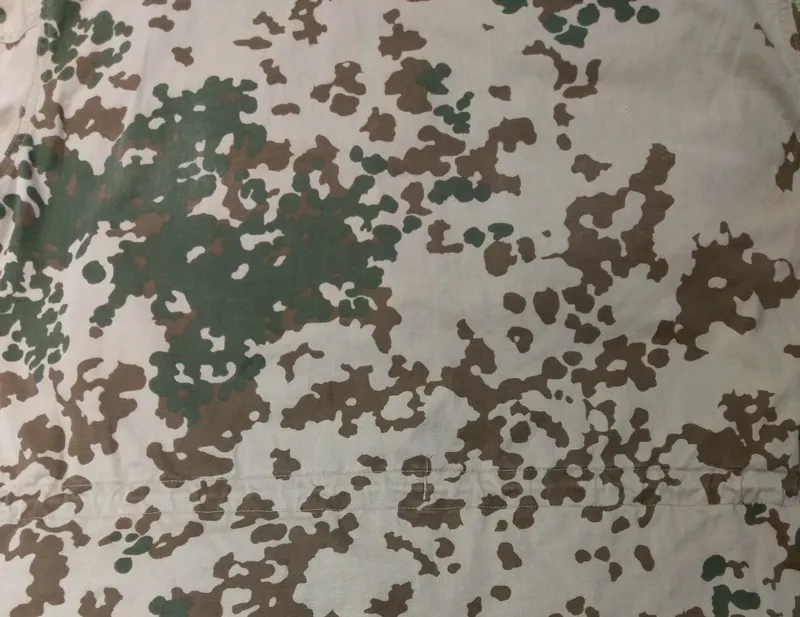
Image via Wikimedia Commons
- What: Camouflage fabrics, originally developed for military concealment, have evolved into significant elements of modern fashion.
- Where: Global, with historical roots in World War I France.
- When: Early 20th century, notably during World War I.
- How: Inspired by nature, particularly the adaptive patterns of butterfly wings, which served as models for concealment.
- Why: Camouflage's transition from military necessity to fashion statement reflects human creativity and the complex relationship between design and purpose.
The Hidden Impact of Camouflage in Modern Textiles
From military uniforms to fashion runways, camouflage fabrics shape our environment today. Annually, millions of yards of camouflage materials are produced, weaving together artistry and utility. Yet, many may not realize that today’s fashion-forward patterns evoke ancient tactics designed for survival on the battlefield.
The Birth of Camouflage: Nature's Inspiration
The history of camouflage textiles dates back to the early 20th century when the need for military concealment during World War I sparked innovation. French artist and soldier Lucien Victor Guirand de Scevolle filed a patent in 1913 for the first artistic camouflage fabric designed to disguise both personnel and equipment. His work laid the groundwork for what would evolve into a tactical necessity. Drawing essential inspiration from nature, designs took cues from the adaptive patterns found on butterfly wings, which confuse predators, creating an ironic connection between aesthetics and survival strategies in warfare.
The Enduring Relevance of Camouflage Patterns
Camouflage has transcended military use and woven itself into everyday fashion. Today, many comfortable styles of clothing, like joggers and swimwear, adopt camouflage patterns, merging comfort with historical significance. The interplay between wartime utility and modern leisure wear challenges our perceptions of both design and purpose. Camouflage serves as a reminder of our ingenuity, transforming a tool of survival into a design statement that reflects our multifaceted identity.
Did You Know?
- The original British Army camouflage, known as "Disruptive Pattern Material," was adopted in 1948 and remains in use to this day. - The patterns utilized in modern military gear often undergo testing with actual predators to enhance effective concealment, taking cues from natural adaptability. - Beyond warfare, camouflage has inspired various art movements, bridging the worlds of military practicality and avant-garde design.
Keep Exploring
CurioWire continues to uncover the world’s hidden histories — one curiosity at a time.
Sources & References
- Smithsonian Institution — The Evolution of Camouflage in Military History
- Fashion Institute of Technology — Camouflage: From Battlefield to Runway
- National Geographic — Nature's Patterns: The Science of Camouflage
As an Amazon Associate, CurioWire earns from qualifying purchases.