
🫀 Secrets of the human vessel
The Surprising Survival of Mammoths During Pyramid Construction
healthPublished 21 Nov 2025
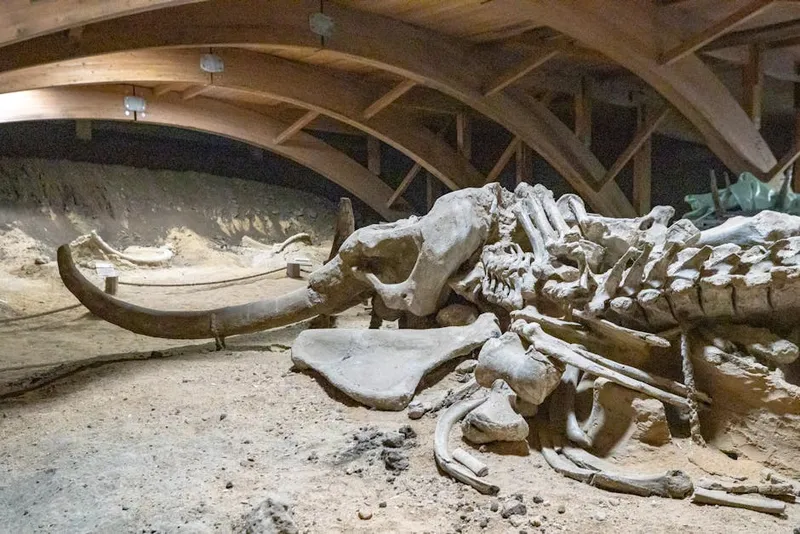
Image courtesy of Pexels
- What: Woolly mammoths thrived on Wrangel Island until 1650 BCE, coinciding with the construction of the Great Pyramid of Giza.
- Where: Wrangel Island, Arctic Ocean
- When: 2560 BCE to 1650 BCE
- How: Isolation allowed mammoths to adapt to changing environments while humans advanced technologically.
- Why: Understanding this overlap provides insights into the historical context of stress and health in both species.
How Last Woolly Mammoths Roamed While Humans Built Wonders
Imagine a world where woolly mammoths and humans coexisted, separated by only a thin veil of time. While the Great Pyramid of Giza rose majestically, the last known population of woolly mammoths thrived on Wrangel Island, far removed from the bustle of ancient Egypt. This extraordinary overlap—where these colossal creatures walked the earth in 2560 BCE—offers us a unique lens into human health that resonates through the ages.
Revealing the Forgotten Final Days of Woolly Mammoths
On Wrangel Island, located in the Arctic Ocean, woolly mammoths lived until approximately 1650 BCE. This remote enclave provided a unique habitat where these majestic creatures endured thousands of years after their mainland relatives succumbed to extinction, driven by climate change and human hunting. The island's isolation allowed this final population to adapt to a dramatically different environment, navigating a landscape of shifting tundras and dwindling food sources.
Records indicate that while the last mammoths roamed, the Great Pyramid was being constructed, showcasing a remarkable intersection of survival and human ingenuity. Over 2.3 million blocks of limestone and granite were meticulously placed to create one of history's most iconic structures, reflecting the technological prowess of ancient Egyptians. In tandem, the mammoths faced environmental adversity, navigating a postglacial world now dominated by humans—a scenario that resonates deeply with our current understanding of stress and adaptation in health.
This juxtaposition serves as a poignant reminder of the pressures our ancestors faced. Historical records and recent studies indicate that stressors—both environmental and societal—play a vital role in shaping physiological responses and health decisions. Just as mammoths adapted to their increasingly challenging conditions, humans too have evolved strategies to cope with the stresses of modern life, emphasizing the importance of understanding our historical context in health strategy.
Understanding Our Health Through Historical Context
The significance of this historical overlap lies in the intricate links between our physiological responses and the stresses faced by our ancestors. Modern research from the World Health Organization underscores how historical stressors can influence contemporary health issues. This phenomenon, known as “biosocial inheritance,” highlights the genetic predispositions we carry, shaped not only by our personal experiences but also by those of past generations.
For instance, a study published in *Nature* revealed that trauma experienced by one generation can affect the stress responses and mental health of subsequent generations. This presents a compelling modern parallel to the survival of woolly mammoths—adaptations to harsh conditions continue to echo through time, underscoring the importance of our past in shaping present health decisions. Understanding such connections can lead to better health strategies, revealing profound truths about resilience and the human experience.
Did You Know?
1. The last woolly mammoths lived until around 1650 BCE, well after the Great Pyramid was constructed.
2. Wrangel Island’s mammoths were smaller than their mainland relatives, adapting to their unique environment.
3. Humans and mammoths coexisted for thousands of years, highlighting complex interactions between species and their environments.
Keep Exploring
CurioWire continues to uncover the world’s hidden histories — one curiosity at a time.
Sources & References
- World Health Organization — Historical Stressors and Health
- *Nature* — Intergenerational Trauma and Stress Responses
- Smithsonian Institution — The Last Woolly Mammoths of Wrangel Island