
🏺 Recovered from the dusty archives
Vikings in Vinland: The Early Discoveries That Changed History
historyPublished 20 Nov 2025
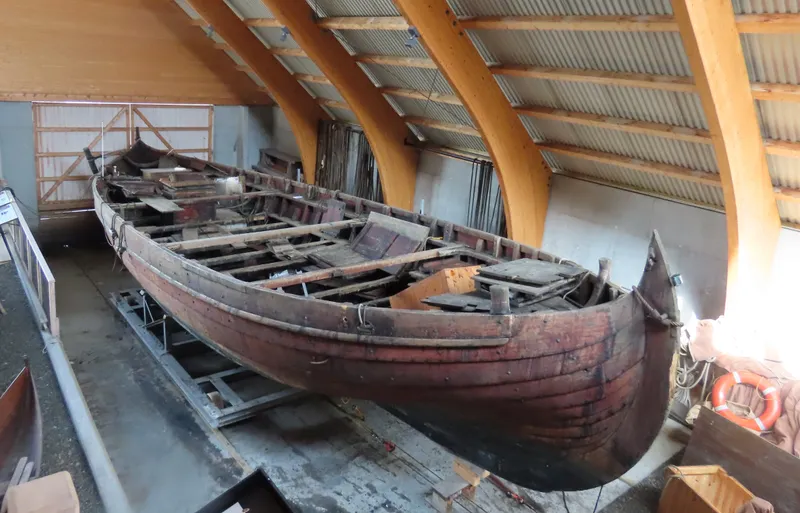
Image via Wikimedia Commons
- What: The Viking expeditions to Vinland, documented in the 10th century, reveal their contact with North America long before Columbus.
- Where: Vinland, believed to be present-day Newfoundland, Canada
- When: Around 1000 AD
- How: Through the accounts of Norse explorers like Leif Erikson and archaeological evidence at L'Anse aux Meadows
- Why: This challenges the traditional narrative of European discovery, highlighting a more interconnected history of exploration and cultural exchange.
Unveiling Viking Footprints in the New World
In the annals of exploration, the Viking Age often feels overshadowed by the voyages of Christopher Columbus. Yet, a tantalizing finding suggests that Viking contact with North America may have occurred long before Columbus set sail. The chronicles of a 10th-century Icelandic monk describe a distant land named "Vinland," widely believed to be present-day Newfoundland, Canada. This early insight into Viking expeditions reshapes our understanding of global exploration and cultural connections, laying the groundwork for a radical reconsideration of European history.
Exploring Vinland: The Viking's New World
During the late 900s, Norse explorer Leif Erikson ventured from Greenland, ultimately reaching the shores of Vinland, as documented in the saga known as the "Vinland Saga." This manuscript, written around 1300 but based on earlier traditions, recounts how Leif and his crew encountered wild grapes and lush landscapes, reinforcing the notion that they explored North America nearly 500 years before Columbus’s historic crossing in 1492. Archaeological evidence, including remnants of a Viking settlement at L'Anse aux Meadows, further supports this narrative, indicating a Norse presence in North America around 1000 AD.
The discovery of Vinland alters our perception of the Viking Age — a period ranging roughly from the eighth to the 11th centuries, characterized by extensive maritime exploration and cultural exchange. As archaeologists unravel layers of history at sites like L'Anse aux Meadows, they uncover artifacts such as iron tools and structures, hinting at the Norse's dynamic interactions with Indigenous peoples, as well as their proficiency in navigating and settling in a land far from their northern homelands. This insight into exploration challenges the established narrative of European discovery in the New World, revealing a more interconnected history than previously imagined.
The Legacy of Viking Exploration Today
The significance of these findings today lies in the fact that Viking expeditions to Vinland illustrate how history is continually rewritten as new discoveries emerge. This exploration invites us to reflect on the fluidity of cultural connections, demonstrating that ideas of discovery are not always straightforward. Modern explorations in historical archaeology often echo the Viking Age in their quest to understand human migration and cultural exchange. Contemporary studies highlight how pre-Columbian trans-oceanic contact may have occurred more frequently than previously believed, mirroring currents seen in Viking ventures. The narrative of exploration is not just about geography; it encompasses the exchange of ideas, cultures, and technologies that shape our world today.
As discussions about cultural heritage and historical validity evolve, the Viking expeditions to Vinland remind us that histories exist in layers, with each archaeological find shedding new light on human experiences. Who were the true pioneers of the New World? Perhaps the Vikings were not merely mythic figures of lore but the first Europeans to tread upon a land that would later become central to the history of the Americas.
Did You Know?
- The term "Vinland" is derived from the Old Norse word indicating "land of wine" or "pasture," highlighting the region's rich flora. - L'Anse aux Meadows, the only confirmed Viking site in North America, was designated a UNESCO World Heritage site in 1978. - Vikings are believed to have traded goods not only within Scandinavia but also with regions as distant as the Mediterranean and possibly Africa.
Keep Exploring
CurioWire continues to uncover the world’s hidden histories — one curiosity at a time.
Sources & References
- The Viking Age: A Very Short Introduction by Julian D. Richards
- Vinland: The Norse Discovery of America by David M. Wilson
- UNESCO World Heritage Centre: L'Anse aux Meadows National Historic Site